
hawkish Fed එකක් නොතකා රත්රන් ඉහළ යන විට
රත්රන්, ඉහළ යන rate-hike odds මධ්යයේම ඉහළ ගොස්, සම්ප්රදායික 'ඉහළ rates, පහළ රත්රන්' රීතිය කඩ කළේය. මෙම ලෝහය ඇත්තටම මෙහෙයවන්නේ කුමන බලවේගයද යැයි හඳුනා ගන්නා ආකාරය මෙයයි.
Deriv කණ්ඩායම · 2026 බිනර 1 · 4 මිනිත්තු කියවීම

සැප්තැම්බර් Fed rate hike එකක ඉඩකඩ ඉහළ ගියද, රත්රන් සති ගණනාවක ඉහළම මට්ටම් කරා ගමන් කළේය, පසුව අවසන් සැසියේ පසුබැසුණි. පොත්පත් රීතිය පවසන්නේ ඉහළ rates රත්රන් පහත හෙළිය යුතු බවයි. එය rates මත පමණක් චලනය නොවීය, මන්ද පාලනයේ තිබුණේ rates නොවූ නිසාය.
ඉහළ rates බොහෝවිට රත්රන්ට හානි කරන්නේ ඇයි
මූලික රීතියක් එක් මෙහෙයවන බලවේගයක් විස්තර කරයි. rates ලෝහය මත ප්රධාන පීඩනය වන විට "ඉහළ rates යනු පහළ රත්රන්" රීතිය ක්රියාත්මක වේ. රත්රන් කිසිදු yield ක් ගෙවන්නේ නැත. rates ඉහළ යන විට, ලාභ ගෙවන ඩොලර් වත්කම් තබා ගැනීම වඩාත් ලාභදායී වන අතර, එමගින් රත්රන් තබා ගැනීමේ opportunity cost ඉහළ යයි. එය සාමාන්ය ඇදගැනීමයි.
වඩා විශාල බලවේගයක් ක්රියාත්මක වන තෙක් මෙම රීතිය ක්රියා කරයි. එසේ වූ විට, එම වත්කම එම රීතිය නොතකා ඉදිරියට ගමන් කළ හැක.
real rates සහ inflation අපේක්ෂාවන් headline rate එකට වඩා වැදගත් වන්නේ ඇයි
nominal rate එක සම්පූර්ණ කතාව නොවේ. රත්රන් මත බලපාන්නේ real rate එකයි, එනම් nominal rate එකෙන් අපේක්ෂිත inflation අඩු කළ ප්රමාණයයි. rates ඉහළ ගියද inflation අපේක්ෂාවන් ඊටත් වඩා වේගයෙන් ඉහළ ගියහොත්, real rate එක පහළ බැස, රත්රන්ගේ opportunity-cost ගැටලුව සැහැල්ලු වේ. එබැවින්, rate ඉහළ යාම inflation පසුකර යනු ඇතැයි ට්රේඩර්වන් සැක කරන විට, hawkish headline එකක් රත්රන් ඉහළ යාමකට සමගාමීව සිදු විය හැක.
rates එකම නිරීක්ෂණය නොකර, rates සහ inflation අපේක්ෂාවන් අතර පරතරය නිරීක්ෂණය කරන්න.
Fed එක යටපත් කරන බලවේගය
පීඩන තුනක් rates ට වඩා බලවත් විය හැක. safe-haven ඉල්ලුම, එනම් කිසිදු රජයකට මුද්රණය කළ නොහැකි වත්කමක් ට්රේඩර්වන්ට අවශ්ය වන විට, වර්ධනයට තර්ජනය කරන භූ-දේශපාලනික ආතති සහ සැපයුම් කම්පනවලදී ඉහළ යාමට නැඹුරු වේ. currency debasement පිළිබඳ බිය, එනම් කරදර වන්නේ yield එක ගැන නොව ඩොලරයේ වටිනාකම ගැනය. සහ central bank විසින් සිදු කරන බරපතල මිලදී ගැනීම්, දවසේ rate odds ගැන තැකීමක් නොකරන ස්ථාවර ඉල්ලුමකි. මෙවර, එම එකතුව hawkish සංඥාවට වඩා බලවත් විය.
කාර්යය නම් ඇත්තටම මිල චලනය පාලනය කරන්නේ කුමන බලවේගය දැයි හඳුනා ගැනීමයි. rate-hike odds ඉහළ යන අතරම රත්රන් ඉහළ යන විට, rates කතාව නොවේ. වඩා විශාල යමක් තිබේ.
ඩොලරය සහ රත්රන් සාමාන්යයෙන් ප්රතිවිරුද්ධ දිශාවලට ගමන් කරන්නේ ඇයි
රත්රන් ඩොලර් වලින් මිල නියම කර ඇති නිසා, දුර්වල ඩොලරයක් රත්රන් ඉහළ නංවීමට නැඹුරු වන අතර ශක්තිමත් ඩොලරයක් එය පහත හෙළීමට නැඹුරු වේ. ඩොලරයේ වටිනාකම අඩු වන විට, එකම අවුන්ස් එකක් මිලදී ගැනීමට ඊට වඩා වැඩි ප්රමාණයක් අවශ්ය වන අතර, වෙනත් තැනක මිල නියම කරන රත්රන් විදේශීය ගැනුම්කරුවන්ට අඩු මිලට ලැබේ. එම ප්රතිලෝම සම්බන්ධතාවය සාමාන්ය රටාවයි. දෙකම එකවර පහත වැටෙන විට එය බිඳී යයි, එය සිදු වන්නේ ට්රේඩර්වන් මුදල් ම විශ්වාස නොකර, ඒ වෙනුවට වටිනාකම් ගබඩාවක් සොයන විටයි. එම විශ්වාසභංගය මෙම rally එක මෙහෙයවන debasement බිය වේ.
Central banks වාර්තාගත ප්රමාණයේ රත්රන් මිලදී ගන්නේ ඇයි
Central banks, ඩොලරයෙන් reserves විවිධාංගීකරණය කිරීම සඳහා රත්රන් මිලදී ගන්නා අතර, එම ස්ථාවර ඉල්ලුම දවසේ rate odds වලට ප්රතිචාර නොදක්වයි. පෙර බොහෝ දුරට US Treasury bonds වල තැන්පත් කර තිබූ reserves, දැන් sanctions අවදානම සහ ඩොලර් සාන්ද්රණයට එරෙහි hedge එකක් ලෙසද, රත්රන් හරහා විහිදී ඇත. අරමුදලකට වඩා වෙනස්ව, central bank එකක් චක්රය පුරාම මිලදී ගනී. එම ව්යුහාත්මක ඉල්ලුම, කෙටිකාලීන rate චලිතවලට කැඩීමට අපහසු පදනමක් ලෝහය යටතේ ස්ථාපිත කරයි.
රත්රන් chart එක දැන් සංඥා කරන්නේ කුමක්ද
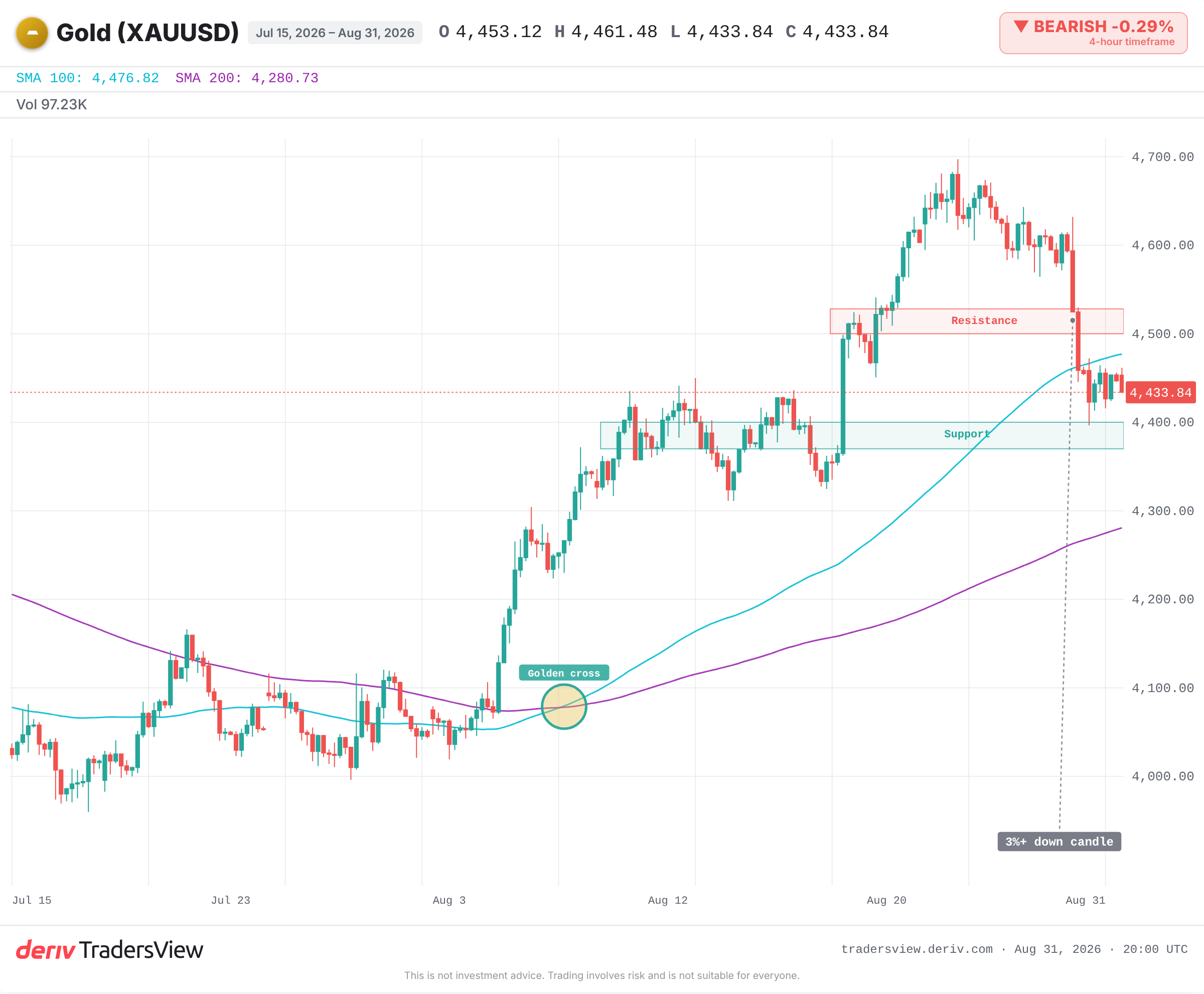
chart එක, තියුණු පසුබැසීමකින් පසු ප්රධාන support එක පරීක්ෂා කරන දුර්වල recovery එකක් සංඥා කරයි. Support එක 4,370 සිට 4,400 අසල පවතින අතර, එය rally එක රැක ගත යුතු floor එකයි. Resistance එක recovery එක 4,500 අසල සීමා කරයි. අවසන් සැසියේ තියුණු පහළ candle එකක් මිල එම support එක දෙසට ආපසු ඇද ගත්තේය. floor එක රැඳී සිටින තාක් recovery එකද රැඳී සිටියි.
මින් ඉදිරියට නිරීක්ෂණය කළ යුතු දේ
විග්රහය මෙසේ නැඹුරු වේ: safe-haven සහ central-bank ඉල්ලුම පාලනයේ පවතින තාක් කල්, rate odds headlines යෝජනා කරන තරමට වැදගත් නොවේ. මෙය ඊළඟ ප්රායෝගික පියවරයි. 4,370 සිට 4,400 support කලාපය trend එක තීරණය කරන රේඛාව ලෙස සලකුණු කරන්න. එයට වඩා පහළින් daily close එකක් සිදු වී, rates නැවත ප්රමුඛත්වයට පැමිණියහොත්, එය පැරණි රීතිය නැවත ක්රියාත්මක වූ බවට සංඥාවකි. රත්රන් rate-hike odds නොතකා හරින අතරම එම මට්ටමේ රැඳී සිටීම, වඩා විශාල බලවේගය තවමත් මෙහෙයවන බව පවසයි. එය ඉක්මනින් වෙනස් විය හැකි බැවින්, එම මට්ටමට සමගාමීව real-rate පරතරය නිරීක්ෂණය කරන්න.
නිතර අසන ප්රශ්න
වෙනත් වත්කම් හෝ මුදල් වර්ග පිළිබඳ සැකයක් ඇති වූ විට ට්රේඩර්ලා රත්රන් මිලදී ගනී, මන්ද එය කිසිදු රජයක හෝ සමාගමක මත රඳා නොපවතින ලෙස වටිනාකම රඳවා ගන්නා නිසාය. බිය හෝ අවිනිශ්චිතතාවයේ කාලවලදී, එම ඉල්ලුම පොලී අනුපාත වැනි සාමාන්ය පීඩනයන්ට වඩා ප්රබල විය හැක.
ඔව්. අඛණ්ඩ මධ්යම බැංකු මිලදී ගැනීම් මගින් ස්ථාවර ඉල්ලුමක් එක් වන අතර, එය අනුපාත ඉහළ යාම වැනි වෙනත් බලවේග සාමාන්යයෙන් රත්රන් මිල පහත හෙළන අවස්ථාවලදී පවා මිල ස්ථාවර කර තබා ගැනීමට උපකාරී විය හැක. එය අනුපාත සම්බන්ධතාවය අභිබවා යා හැකි සාධකයකි.
සැබෑ ප්රතිලාභ යනු උද්ධමනයෙන් පසු පොලී අනුපාත වේ. ඒවා තීරණාත්මක ලෙස ධනාත්මක වන විට, කිසිවක් නොගෙවන රත්රන් තබා ගැනීමට වඩා පොලිය ගෙවන වත්කම් තබා ගැනීම වඩාත් ආකර්ෂණීය වේ. එවිට ‘ඉහළ අනුපාත, පහළ රත්රන්’ යන සම්භාව්ය සම්බන්ධතාවය නැවත තහවුරු වීමට නැඹුරු වේ.
රත්රන් තියුනු ලෙස උච්චාවචනය විය හැක. එහි මෑත කාලීන සාමාන්ය දෛනික පරාසය USD 99ක් ආසන්නයේ පවතී, එබැවින් එක් සැසියකදී 3% හෝ ඊට වැඩි චලනයන් සිදුවිය හැක. එම උච්චාවචනය ප්රධාන සිදුවීම් වටා ට්රේඩර්වරුන්ගේ පොසිෂන් ඉක්මනින් ඉවත් කිරීමට හේතු විය හැක.