
Why a Stronger Dollar Hits Silver Hardest When Rate Bets Shift
Silver fell 14% to a seven-month low as the dollar surged and Fed hike bets rose. Why non-yielding metals move most when rates and the dollar shift.
By the Deriv desk · 25 June 2026 · 4 min read

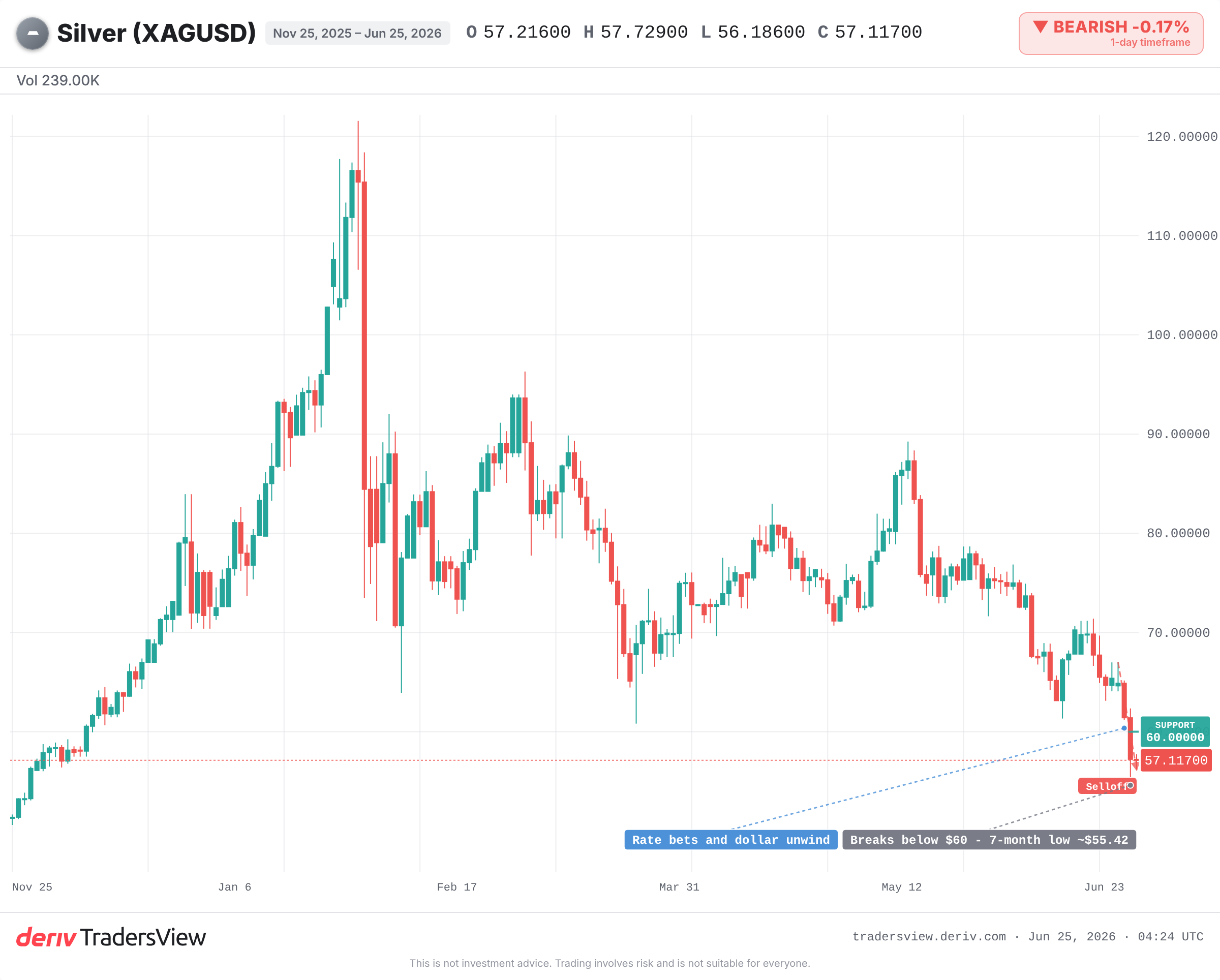
Silver's biggest moves come from the dollar and rate bets, not its own story. This week silver fell as much as 14% to a seven-month low near $56. The trigger was not silver. It was a surging dollar and a market pricing higher odds of a September Fed rate hike.
Why a strong dollar drags silver down
Silver pays no yield. That is the whole problem here. When rates and the dollar rise, holding a non-yielding metal costs more, because cash and bonds suddenly pay you to wait.
So the opportunity cost jumps. Money that was happy to sit in silver finds a better return elsewhere. The metal's spot fundamentals did not change this week; the price of holding it did.
Add fading Middle East tensions, which drained safe-haven demand, and you get a fast exit. Treasury yields rose, the dollar firmed, and silver gave back months of gains in days.
How a crowded rally unwinds faster than it builds
Silver had run hard, with year-over-year gains reported above 170% before this week. A move that size builds a crowded long. Leverage stacks up. Everyone leans the same way.
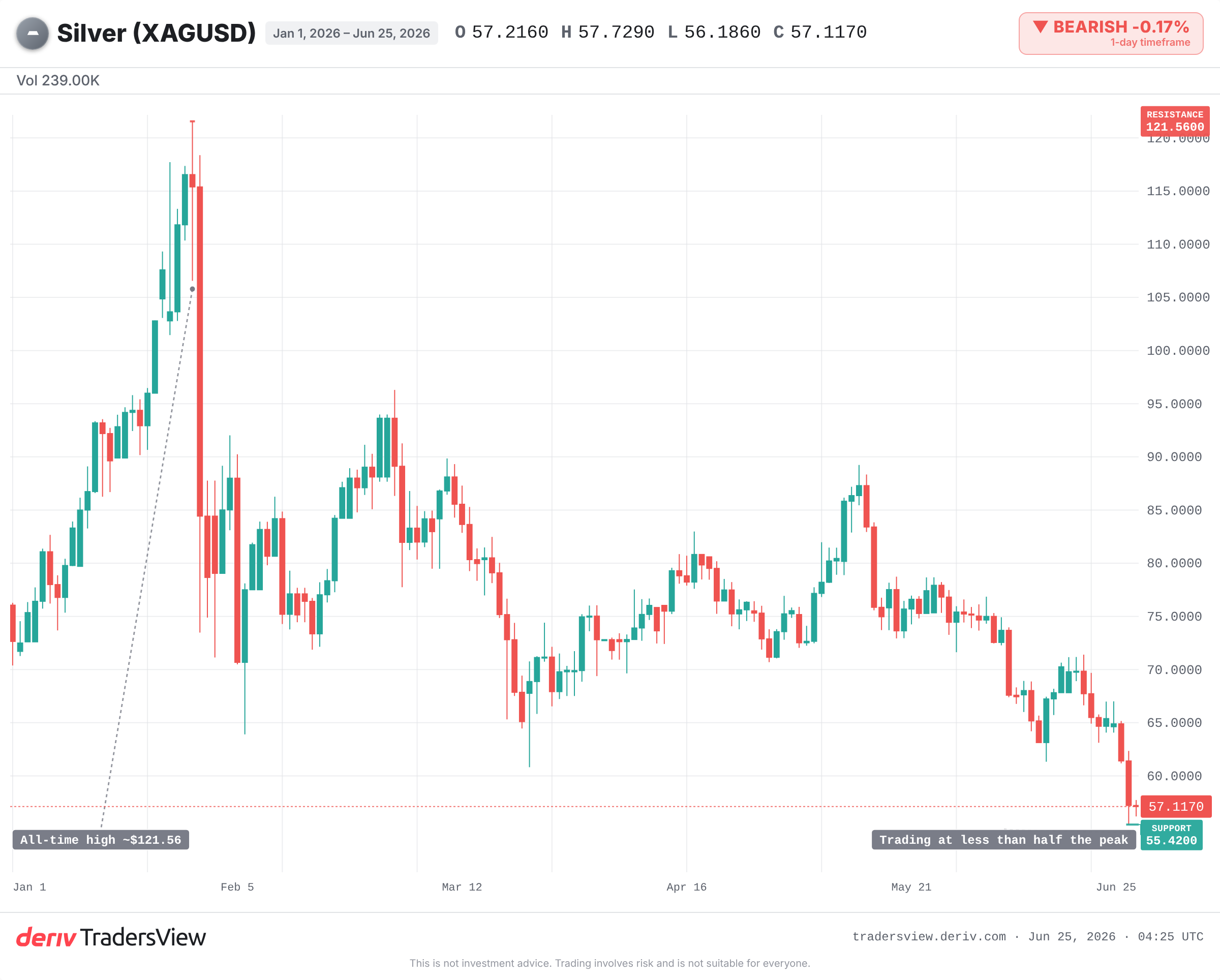
When the macro story turns, that crowd heads for one door at once. The drop on June 23 was sharp, then July futures broke below $60 on June 24 for the first time since December 2025. Silver now trades at less than half its January high near $121.
This is an old pattern. In April 2011, silver neared $50, then collapsed roughly 30% in days after margin hikes and a turn in dollar sentiment. It did not see those highs again for over a decade. The 2013 taper tantrum told the same story: rate expectations rose, real yields jumped, and metals fell despite no change in their own supply or demand.
The case that the crash is overdone
The clean read is a rate-driven washout. The honest counter is that positioning may have overstated it.
Silver has real industrial demand that gold lacks, in solar panels and electronics. A 14% drop after a 170%-plus run looks more like a leveraged long unwinding than a structural top. The same leverage that drove the crash can fuel a snap-back if the macro pressure eases.
If the September hike fails to show up after the inflation data, or the dollar rolls over, silver could rebound toward $60. The gold/silver ratio, around 66 this week, shows silver underperforming gold, a sign of stress that can reverse quickly.
What to watch next
- The US PCE inflation print and whether it raises or lowers September hike odds.
- The dollar index and the path of Treasury yields and real rates.
- Whether the $56 low holds or silver stabilises near $60 as some expected.
- Middle East de-escalation or re-escalation shifting safe-haven demand.
The lesson outlasts the week. When the Fed and the dollar drive the tape, the asset that pays no yield often moves most, even when its own story has not changed. Silver's industrial demand is the one thread that can let it break ranks.
Frequently asked questions
Not always, but a stronger dollar raises the cost of holding non-yielding metals, so silver often comes under pressure. Silver's industrial demand can offset this when the dollar move is mild.
Silver is more volatile and more tied to leveraged speculative positioning than gold. When a crowded rally unwinds, silver tends to drop faster, which widens the gold/silver ratio.
It measures how many ounces of silver equal one ounce of gold. A rising ratio means silver is underperforming gold, often a sign of risk stress or a metals selloff led by silver.
Silver is used in solar panels and electronics, giving it a demand base gold lacks. Strong industrial use can support prices even when investment demand fades on rate fears.