
Why some commodity rallies hold and others crumble
A supply-scare rally in oil crumbles fast; a demand or weak-dollar rally in copper and platinum tends to hold. How to tell the two apart.
By the Deriv desk · 7 August 2026 · 3 min read

A commodity rally built on a supply scare fades fast; one built on real demand or a weak dollar tends to hold. That single test tells you which of today's moves to trust. Oil is climbing on a Strait of Hormuz scare. Copper and platinum are climbing on demand and a softer dollar.
Same tape, two very different engines. One fades when the headline does; the other keeps grinding. Cocoa just showed the first kind fail.
The supply-scare rally: loud, fast and short-lived
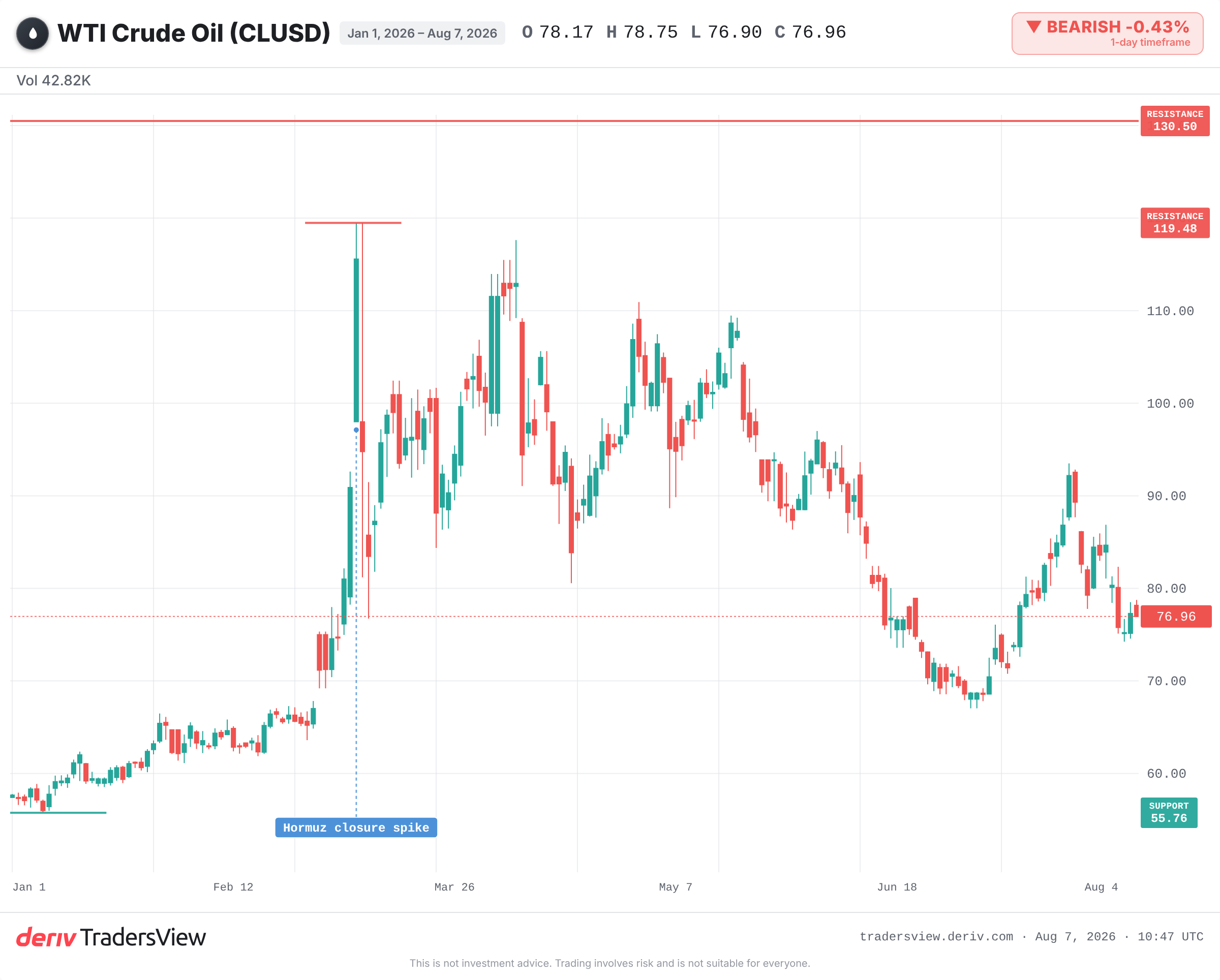
Oil is the clearest case. Tankers are going dark again as tensions build around the Strait of Hormuz, and US petrol has climbed back above $4 a gallon. On paper, that sounds like a one-way push higher.
The price says otherwise. US crude and Brent both sit well below their 2022 record highs and comfortably inside this year's range. Even with a live supply threat, oil has not broken out.
A supply-scare rally prices in fear, and fear can deflate as fast as it arrives. In an earlier 2026 standoff, crude jumped more than 6% in a single session when the Strait was blocked. Those gains did not stick once the acute fear eased.
Cocoa shows what happens when the supply comes back
Cocoa is the recent cautionary example. It ran to a multi-month peak in early August on a tight-supply story, then reversed lower.
The trigger was straightforward. Stronger output from Ghana eased the shortage, and the rally that depended on scarcity had nothing left to stand on. Intraday spikes still happen, but the direction turned once the supply returned.
Every supply-cut spike carries the same weakness. Remove the cut, and you remove the reason to hold the price.
The demand rally: quieter, slower, harder to unwind
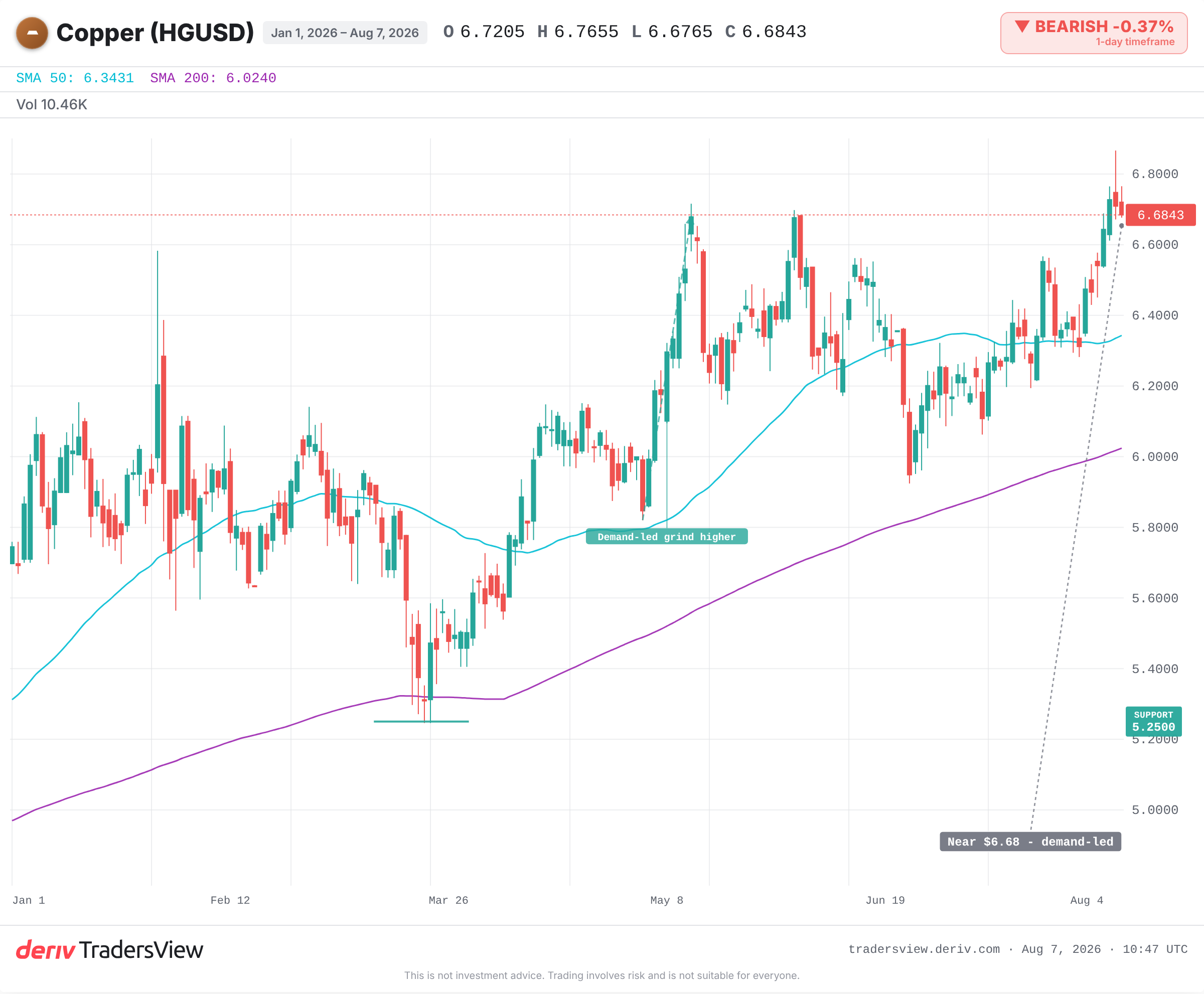
Copper and platinum rest on sturdier ground. Copper draws on a real demand pull from AI data-centre buildout and clean-energy wiring, alongside genuine supply disruptions in Congo and at Codelco.
Precious metals lean on a second support: a softening US dollar. When the dollar weakens, dollar-priced metals become cheaper for the rest of the world, and demand firms.
Demand and currency shifts do not vanish overnight the way a headline scare does. That is why a demand-led move tends to grind higher and hold, while a fear-led move tends to spike and fall back.
How to read which rally you are looking at
The obvious read is that Hormuz tensions plus multiple supply cuts must push everything structurally higher. The counter is stronger. Oil staying inside its range even as tankers go dark suggests the market is discounting a diplomatic fix and treating the risk as a premium that can drain quickly.
The clean test comes if tensions ease. Watch whether oil slides back towards the middle of its range while copper and platinum hold firmer. That divergence would show which rallies had real foundations and which were only fear.
No driver is permanent. A firming dollar would undercut the metals leg, and a slowdown in data-centre demand would soften copper. But the framework holds: name the fuel before you trust the fire.
Frequently asked questions
Check what changed. If the move followed a specific disruption or geopolitical headline, it is likely a supply scare that can reverse when the situation eases. If it tracks steady end-use demand or a shifting dollar, it rests on firmer ground.
Copper, platinum and gold are priced in dollars. When the dollar weakens, those metals become cheaper for buyers using other currencies, which tends to lift demand and support the price.
It is a narrow shipping channel through which a large share of the world's seaborne oil and LNG passes. Any threat to traffic there raises fears of a supply shortage, which adds a risk premium to crude prices.
Not necessarily. High pump prices reflect the current supply premium, but that premium can deflate quickly if tensions ease. Oil staying inside its yearly range suggests the market expects a resolution.