
Why one cancelled iPhone re-priced Apple's whole future
Apple scrapped one iPhone and got a sell downgrade. The market re-priced years of assumed pricing power, not one product. How growth stocks really trade.
By the Deriv desk · 11 August 2026 · 4 min read

A growth stock's price is a bet on a story continuing. When one event cracks that story, the re-pricing dwarfs the event itself.
Apple scrapped a planned all-glass iPhone over poor production yields. On its own, that is a niche engineering setback. But Jefferies read it as proof of something bigger: Apple can no longer easily charge more by adding premium form factors. It cut its five-year iPhone price-growth forecast and downgraded the stock to sell.
The market did not sell one phone. It discounted the credibility of Apple's future pricing power. That is what a premium valuation actually rests on, and why a single cancelled prototype can wipe years off the story.
Why a scrapped prototype hits harder than a single miss
A scrapped prototype hits harder because it is evidence about the future, and a single miss is just one past quarter. A missed quarter can be a blip. A cancelled premium product is a sign the growth engine may be stalling.
A share price is not a verdict on today's earnings. It is the present value of every dollar the company is expected to make for years ahead. For a growth name, most of that value sits in the future.
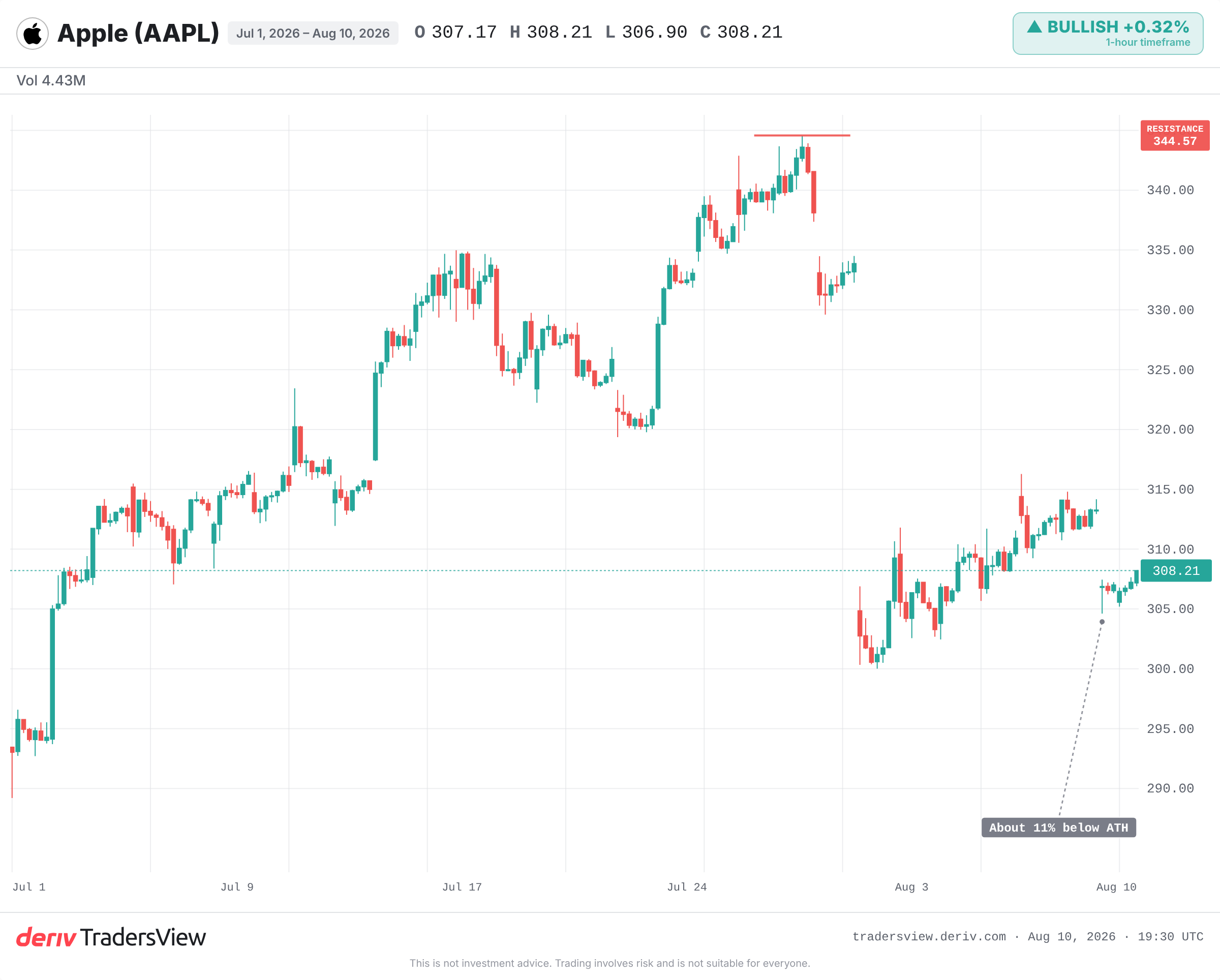
So the question that moves the stock is not "how did it do this quarter?" It is "is the story still on track?"
Apple's premium story runs on pricing power: the belief it can keep nudging iPhone prices higher and buyers keep paying. Jefferies trimmed its assumed price-growth rate for 2026 to 2031. A small change to a compounding rate, spread over years, shifts a lot of assumed profit. The cancelled phone mattered as evidence, not as lost sales.
Apple has lost the story before and rewritten it
This pattern is not new, and Apple itself is the clearest case.
After peaking in September 2012, fears that iPhone margins and growth had topped out took hold. The stock fell roughly 40% into 2013. Nothing had broken. The market had simply re-priced a worse future, then recovered as new products revived the narrative.
In January 2019, Apple cut revenue guidance on weak iPhone demand in China. The stock dropped about 10% in a session. Then Services growth handed the market a fresh story to price, and shares climbed through the year.
Netflix shows the harsher version. When its first-quarter 2022 results revealed a subscriber loss, the stock fell more than 35% in a single day, far beyond what one quarter justified. Years of assumed uninterrupted growth were priced out at once.
Does one forecast cut prove pricing power is broken?
No, and this is where the bear case is thin. The read assumes hardware price growth is Apple's engine. It has not been the only one for years.
Services revenue, installed-base monetisation and future AI features can carry the premium even if iPhone price rises slow. One cancelled prototype over yield problems is an engineering issue, not a broken thesis. Jefferies is one sell-side voice, and the stock trades near its highs.
The bear case is confirmed only if reported iPhone selling prices and upgrade rates actually stall over several quarters. A forecast revision is a claim, not proof.
What to watch next
- Reported iPhone average selling prices and unit trends in coming Apple results.
- Whether other analysts follow with downgrades or defend the pricing-power thesis.
- Services growth, the alternative story that offsets slower hardware pricing.
- Consumer resistance to $1,000-plus and $2,000-plus price points in a weaker economy.
The takeaway for reading a growth stock
The Apple case shows the mechanism cleanly. A premium valuation rests on a story about the future, here pricing power, and a single event can crack that story long before any number confirms it. That is why the stock can lurch on news that changes no current sale.
So when a growth name jumps or drops on small news, do one thing first: identify which story cracked, not which number missed. Then test it against the evidence over the next few quarters, not the first-day reaction. Trading carries risk, and a single analyst call is a view, not a verdict.
Frequently asked questions
ASP means average selling price, the typical price a customer pays per unit. For Apple, a rising iPhone ASP signals pricing power. Analysts model its growth rate over years, so even a small cut to that rate lowers a lot of assumed future profit.
A downgrade rarely moves a stock through the rating alone. It moves the price when it changes the assumptions built into a valuation, such as future growth or margins. The market re-prices those revised expectations, not the analyst's opinion.
Most of a growth stock's value sits in expected future earnings rather than current ones. When news questions that future, a large chunk of the valuation is at stake, so the reaction is larger than a single quarter's numbers would justify.
Not reliably. History shows growth stocks often re-price sharply on a story scare, then recover when a new narrative emerges. The lasting damage only shows up if reported results confirm the concern over several quarters.