
Why Alphabet's record quarter still sank the stock
Alphabet posted record cloud growth and the stock still fell. Price moves on the gap between results and expectations, not the headline beat.
By the Deriv desk · 24 July 2026 · 3 min read

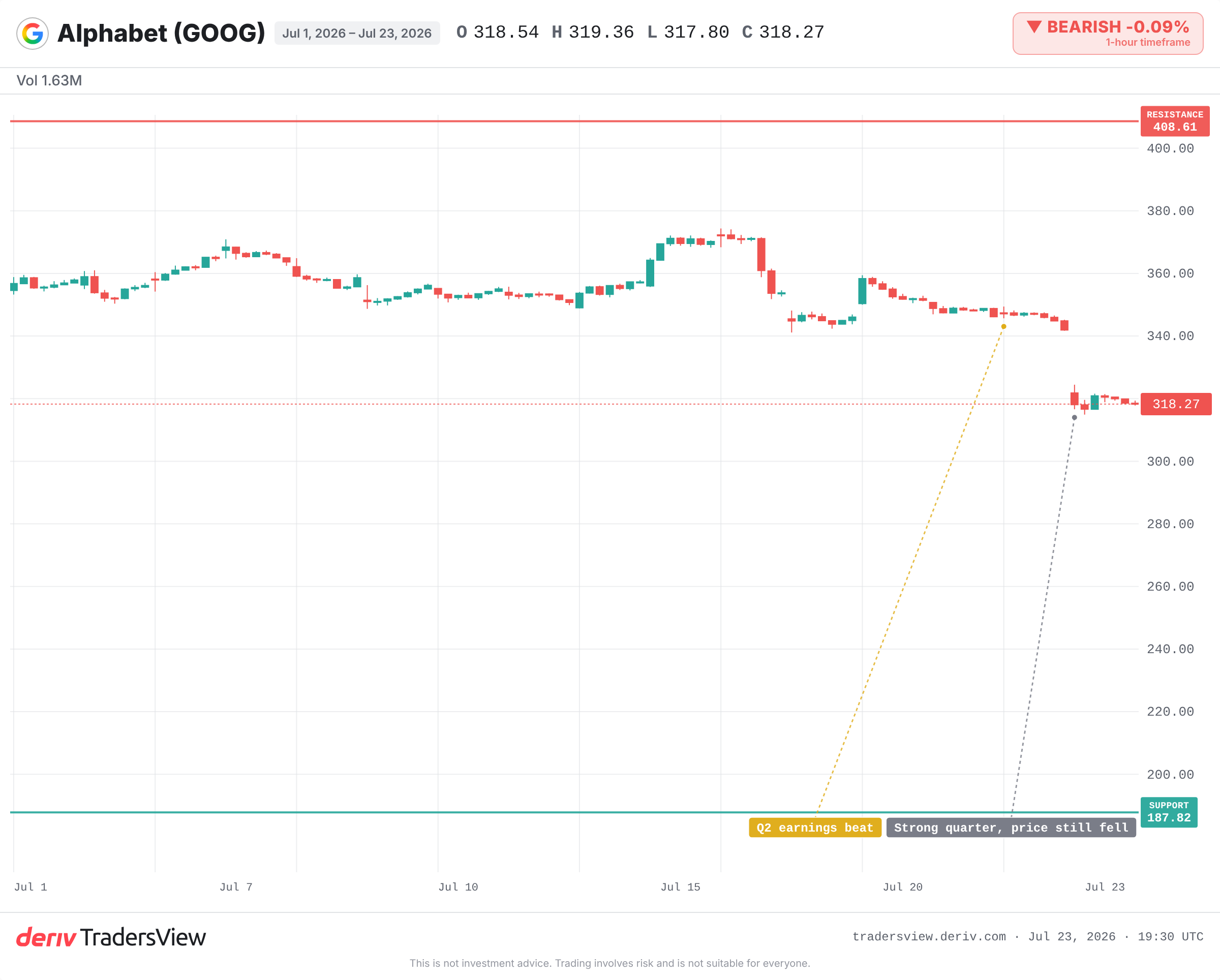
Alphabet posted a record quarter and the stock still fell. A share price moves on the gap between results and what was already priced in, not on how good the news is.
The quarter was genuinely strong. Google Cloud revenue grew sharply and segment profit hit a record. The stock still fell hard.
Investors had already expected a strong print. So they looked past the beat and fixated on two things: a huge jump in spending, and a delayed Gemini model. Good results and a rising stock are not the same event.
Why a beat can still send shares down
A share price is a bet on the future. By earnings day, the market has already guessed the result and paid for it. The price you see going in reflects that guess.
So the report isn't judged against zero. It's judged against the expectation baked into the price. Beat the whisper and clear the fears, the stock rises. Beat the headline figure but miss on what people cared about, and it can fall anyway.
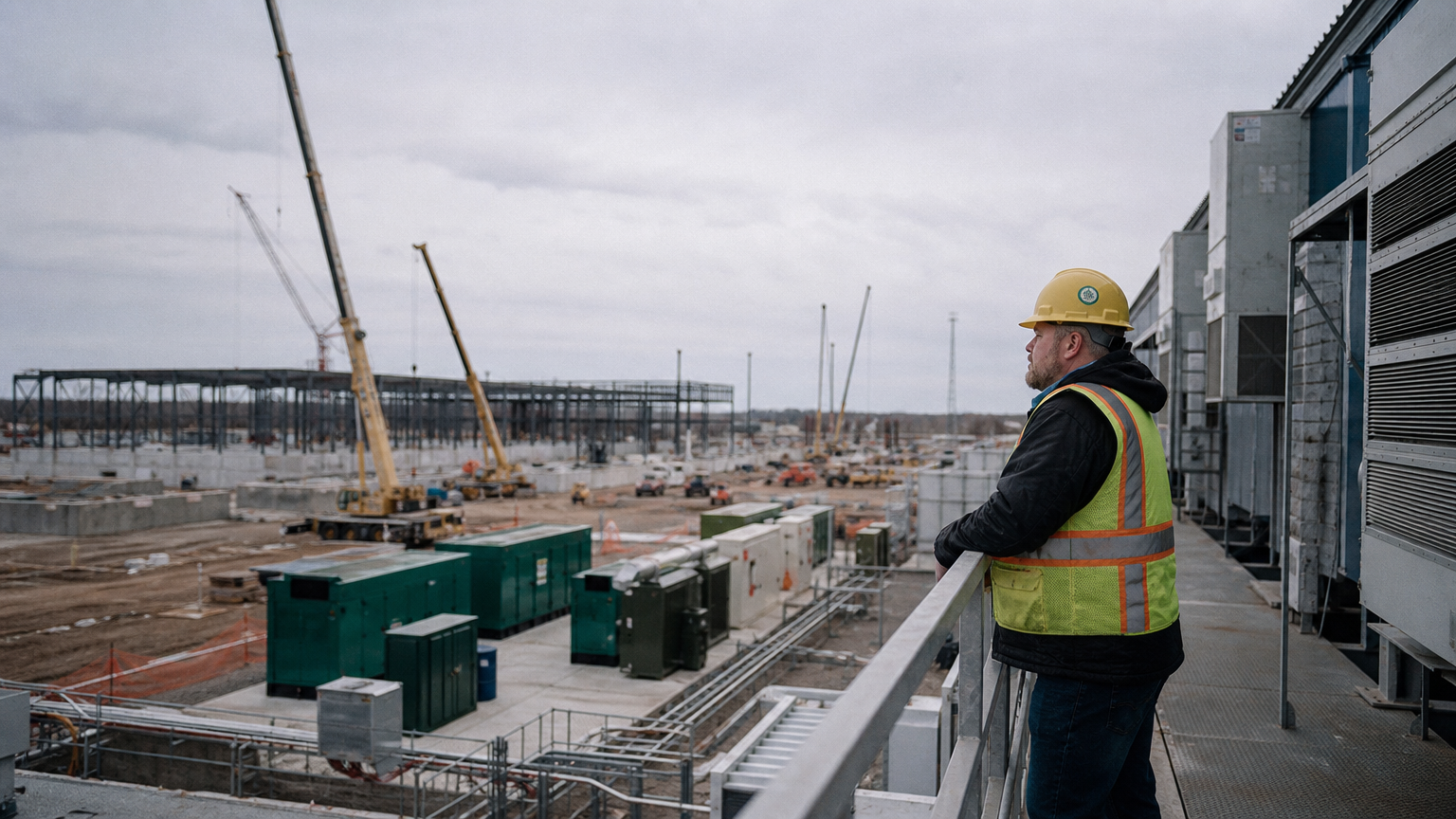
Alphabet's cloud strength was real, but it wasn't the surprise. The spending was. Capex guidance for 2026 landed around $180 to $190 billion. Reports suggest free cash flow turned negative on the quarter. That's what the market repriced.
When heavy spending scares investors
Capex splits opinion for a good reason. Spend to chase real demand, and it builds the next leg of growth. Spend without proof it pays off, and it just eats cash.
Alphabet's own numbers show demand is there. Management pointed to a cloud backlog that dwarfs a full year of past cloud revenue, and said capacity limits held sales back. That's a queue of paying customers, not a guess.
The worry is timing and scale. The returns on that spend are unproven, and the bill is enormous. The bearish read isn't that the market missed a bargain. It's that a lower price is a rational response to unproven risk.
What past big-tech sell-offs tell us
This pattern repeats across mega-cap earnings. In late 2022, Meta was punished for spending on its future bets while headline growth slowed. The stock fell sharply, then staged a large recovery through 2023 as the spending story clarified.
Amazon spent years reporting strong revenue while heavy investment suppressed profit and, at times, the share price. When that investment later converted to margin, the stock rerated higher.
The market's first reaction is not the final verdict. Feared spending can be rewarded later, if it produces returns. But that isn't guaranteed, and it never arrives on a fixed schedule.
What to watch next
The evidence leans towards this being a repricing of risk, not a simple overreaction. Whether it reverses depends on the numbers behind the fear.
- Whether capex guidance climbs further in coming quarters.
- The free cash flow trajectory after this quarter's reported turn.
- How fast the cloud backlog converts to revenue; management guided over half within 24 months.
- Gemini's timeline and whether Google stays competitive on AI products.
The bull case strengthens if the backlog converts on schedule and margins hold. It weakens if cloud growth slows while spending keeps rising. Either way, the lesson stands: check what a stock was already expected to do before you judge how it reacts.
Frequently asked questions
It means the market has already factored an expected result into the current share price. If a company delivers exactly what was expected, the stock may not move, because that outcome was already paid for before the report.
Analyst consensus estimates for revenue and profit are widely published ahead of earnings. Just as important is the tone around a stock: guidance, spending plans and product timelines that investors are watching, which the headline figure alone won't tell you.
Not automatically. Some sell-offs reverse once the market digests the numbers, as happened with Meta after 2022. Others reflect a rational repricing of real risk. The reaction depends on whether the underlying concern, such as unproven spending, resolves in later quarters.
Heavy spending lowers near-term cash flow and profit, and its payoff is uncertain. Investors reward capex tied to visible demand, like a large order backlog, and punish spending whose returns are unproven or whose scale looks unsustainable.