
Which broker is best for trading Synthetic Indices?
Deriv is one option for traders focused primarily on Synthetic Indices because it created the instruments and offers a broad range of Synthetic Indices. While several brokers now provide access to Synthetic Indices, including Vantage, FXPrimus, and Accuindex, there remains a meaningful difference between the broker that built the category and the brokers that later added it to their product offering.
If you're comparing brokers before opening an account, it's worth looking beyond spreads and platforms. Product origin, instrument range, platform support, account types, and regulation can all affect your trading experience. This guide compares Deriv with some of the most visible alternatives to help you understand where the brokers align, where they differ, and which option may be a suitable fit for your trading goals.
Key takeaways
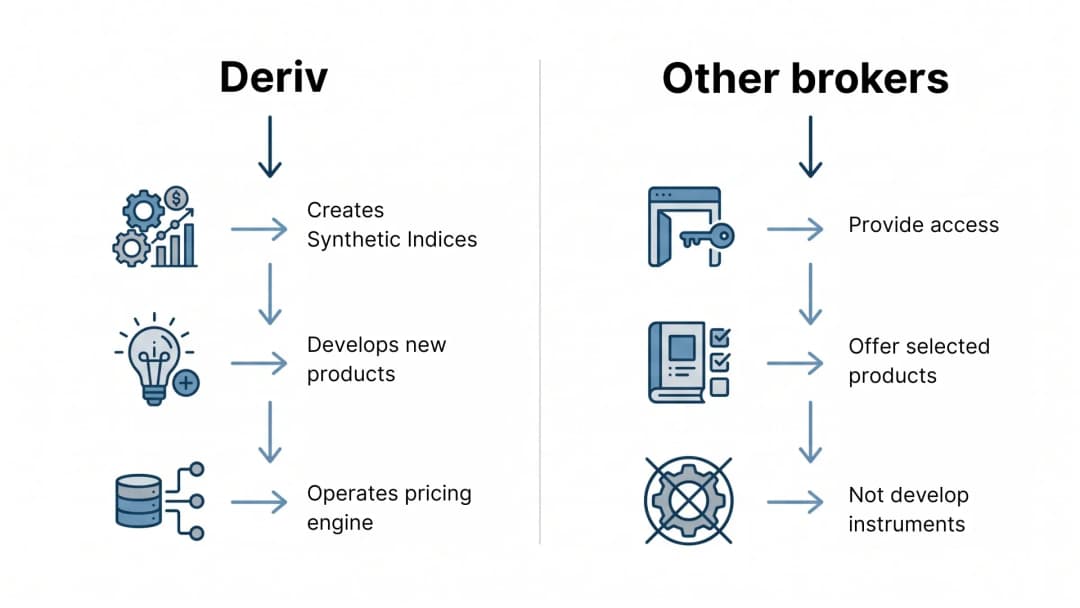
☑️ Deriv created Synthetic Indices and operates the underlying price-generation technology.
☑️ Other brokers provide access to Synthetic Indices but do not create or develop the instruments.
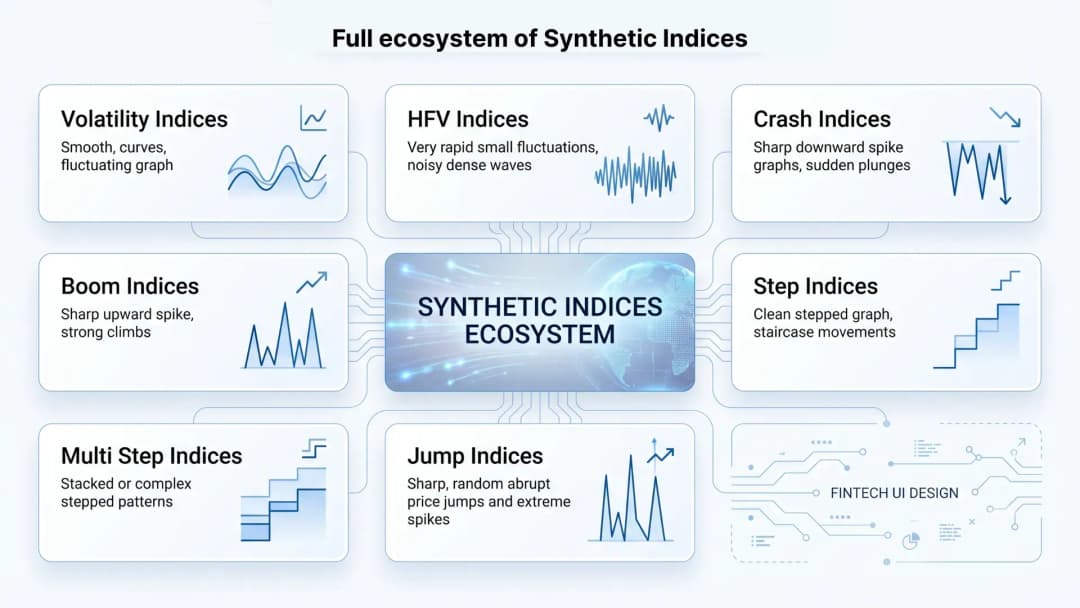
☑️ Deriv offers the broadest selection of Synthetic Index categories, including Volatility, High Frequency Volatility (HFV), Crash and Boom, Step, Multi Step, and Jump indices.
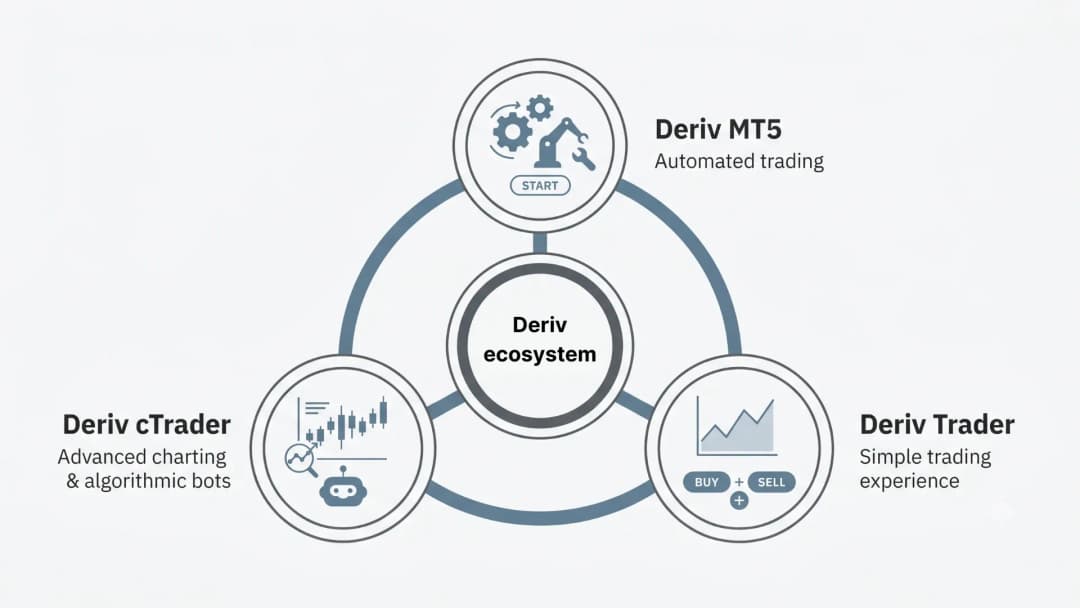
☑️ Synthetic Indices are available across Deriv MetaTrader 5 (Deriv MT5), Deriv Trader, and Deriv cTrader.
☑️ Multiple account types are available, including accounts designed specifically for Synthetic Index trading.
☑️ All major brokers operate under regulated entities, although the regulatory framework varies by jurisdiction.
Deriv, Vantage, FXPrimus, and Accuindex side by side
The table below compares four brokers commonly associated with Synthetic Index trading.
| Feature | Deriv | Vantage | FXPrimus | Accuindex |
|---|---|---|---|---|
| Product origin | Creator of Synthetic Indices and operator of the underlying pricing engine | Access provider | Access provider | Access provider |
| Instrument range | Volatility, High Frequency Volatility (HFV), Crash & Boom, Step, Multi Step, Jump indices | Selected Synthetic Indices | Selected Synthetic Indices | Selected Synthetic Indices |
| Trading platforms | Deriv MT5, Deriv Trader, Deriv cTrader | MetaTrader 4 (MT4), Deriv MT5, TradingView, Vantage App | MT4, Deriv MT5, WebTrader | Deriv MT5, WebTrader, AccuGo, AccuConnect |
| Synthetic-focused accounts | Dedicated synthetic accounts available | No dedicated synthetic account | PrimusSynthetic account available | General trading accounts |
| Platform ecosystem | Built specifically for Synthetic Index trading | Multi-asset focus | Multi-asset focus | Multi-asset focus |
| Regulation | Multiple regulated entities globally | Multi-jurisdiction regulation | Multi-jurisdiction regulation | Multi-jurisdiction regulation |
Broker features and product availability may change over time. Always verify the latest specifications directly with the provider before opening an account.
Product origin: who created Synthetic Indices?
When comparing synthetic brokers, product origin is arguably the most important distinction.
Deriv did not simply add Synthetic Indices to an existing platform. It created the category itself and continues to develop the technology that powers these markets.
The Synthetic Index pricing engine is designed to simulate realistic market behaviour using cryptographically secure random number generation and predefined volatility characteristics. Because Deriv operates the underlying infrastructure, it controls how the instruments are designed, maintained, and expanded.
Other brokers typically provide access to Synthetic Indices rather than creating them. They offer the products to their clients, but they do not develop the instruments themselves or determine how new synthetic markets are introduced.
For traders, this difference becomes important because the creator of the product determines:
▪️ Which instruments are available
▪️ How volatility characteristics are structured
▪️ When new products launch
▪️ How the product family evolves over time
This in-house development model can affect how the market is maintained and supported. When a broker acts only as an access provider, they're dependent on a third-party feed that they cannot directly maintain or troubleshoot. In contrast, Deriv's direct control over the pricing engine can help support consistent market operation over time.
As a result, innovations and new Synthetic Index categories generally appear first on Deriv before becoming available elsewhere.
Instrument range: full ecosystem vs selected products
Many traders use the phrase "Synthetic Indices" as though it refers to a single market.
In reality, Synthetic Indices are an entire ecosystem of products designed for different trading styles and risk preferences.
Deriv's Synthetic Index categories
Deriv offers:
Volatility Indices
▪️ High Frequency Volatility (HFV) Indices
▪️ Crash Indices
▪️ Boom Indices
▪️ Step Indices
▪️ Multi Step Indices
▪️ Jump Indices
Each category behaves differently and appeals to different strategies.
For example:
▪️ Volatility Indices are designed to maintain constant levels of volatility.
▪️ HFV Indices provide faster market movements and more trading opportunities.
▪️ Crash and Boom Indices are known for their periodic spikes and drops.
▪️ Step Indices move in predictable increments.
▪️ Jump Indices feature sudden large price movements.
Why instrument range matters
A trader who specialises in Crash 1000 setups may require a completely different market from someone trading HFV or Jump Indices.
Beyond immediate availability, a broader range gives traders more flexibility as their strategy changes. Market conditions change over time. A strategy that works well on Volatility Indices during steady periods may be less suitable during faster moves, when Crash or Boom Indices could be more relevant. Having access to this full spectrum within a single broker means traders can adapt to these shifting market dynamics without the friction of moving capital or learning a new broker's execution quirks, ensuring their long-term strategy remains resilient.
This is why instrument availability matters more than many traders initially realise.
Deriv carries a broad range of Synthetic Indices, including instrument types not available on other platforms.
For traders who focus primarily on synthetic markets, access to the full ecosystem creates more opportunities to test strategies, diversify approaches, and adapt to changing market conditions without switching brokers.
Trading platforms: where can you trade Synthetic Indices?
Platform availability is another area where brokers differ significantly.
Most brokers support MetaTrader 5 because it remains one of the industry's most widely used trading platforms. However, platform options beyond the standard MT5 offering often determine the overall trading experience.
Deriv MT5
Deriv MT5 provides access to Synthetic Indices alongside advanced charting tools, technical indicators, and automated trading capabilities through Expert Advisors (EAs).
This may suit traders who rely on systematic or algorithmic strategies.
Deriv cTrader
Deriv also offers Synthetic Indices on cTrader.
Key features include:
▪️ Advanced order management
▪️ Depth of Market functionality
▪️ cBot automation
▪️ Professional-grade charting
For traders who prefer cTrader's interface and execution tools, this creates additional flexibility that is not always available elsewhere.
Deriv Trader
Deriv Trader is designed for traders who want a streamlined and intuitive trading experience.
The platform provides:
▪️ Streamlined trade execution
▪️ User-friendly interface
▪️ Browser-based access
▪️ Efficient account management
This makes it suitable for newer traders who may not require the advanced features of Deriv MT5 or cTrader.
TradingView integration
Many traders today rely heavily on TradingView for chart analysis.
Several brokers, including Vantage, support TradingView connectivity. Traders comparing brokers should evaluate whether they prioritise platform flexibility, advanced automation, or direct Synthetic Index access when making their decision.
Account types and trading flexibility
Another important consideration is account structure.
Different brokers offer different account types, each designed around specific trading preferences.
Deriv provides multiple account options, including dedicated Synthetic Index accounts. This allows traders to focus specifically on derived markets without needing to trade traditional asset classes.
Other brokers typically structure accounts around broader Contract for Difference (CFD) trading models, such as:
▪️ Standard accounts
▪️ ECN accounts
▪️ Raw spread accounts
▪️ Professional accounts
Dedicated synthetic accounts can help keep trading activity organised and support risk-management workflows. Mixing Synthetic Indices with traditional asset classes like forex can complicate margin management and cloud a trader's performance analysis. By maintaining a standalone account, traders can apply specific risk parameters unique to the 24/7 nature of synthetic markets. This separation can help you stay organised and keep synthetic trading separate from longer-term capital.
For traders whose primary interest is Synthetic Indices, dedicated account options can simplify account management and provide a more focused trading environment.
Regulation and account setup
Regulation remains a critical factor when choosing any broker.
Most established brokers operate through multiple regulated entities across different jurisdictions. The exact regulatory framework that applies to your account depends on your country of residence and the legal entity under which your account is registered.
When evaluating regulation, traders should look beyond the simple question of whether a broker is regulated.
More useful questions include:
▪️ Which entity will hold my account?
▪️ What client-money protections apply?
▪️ What dispute-resolution mechanisms exist?
▪️ What leverage restrictions apply in my jurisdiction?
Deriv operates through multiple regulated entities serving clients across different regions. Similar multi-entity structures also exist at Vantage, FXPrimus, and Accuindex.
Before opening an account, traders should review the latest regulatory disclosures published by each broker and ensure they understand which entity will provide their services.
Which broker is best for Synthetic Indices?
The answer depends on what you want to trade.
If your focus is spread across forex, commodities, stocks, and CFDs, you may prioritise platform features, pricing, or account structures.
If Synthetic Indices are your primary focus, the key factors to compare change.
The most important considerations are:
- Product origin
- Instrument range
- Access to new Synthetic Index developments
- Platform support for synthetic trading
If you're still evaluating providers, it can help to understand the key factors used when choosing a Synthetic Indices broker.
Because Deriv created Synthetic Indices and continues to develop the category, it remains the destination where new instruments are introduced first and where the widest selection of synthetic markets is available.
For traders who want access to the complete Synthetic Indices ecosystem rather than a limited selection of products, that distinction can make a meaningful difference.
Explore Deriv's Synthetic Indices
Synthetic Indices are available across Deriv MT5, Deriv Trader, and Deriv cTrader, giving traders multiple ways to access the market.
Whether you're interested in Volatility Indices, High Frequency Volatility Indices, Crash and Boom Indices, Step Indices, Multi Step Indices, or Jump Indices, you can explore the full range through a free demo account before trading with real funds.
Open a free demo account and explore the full range of Synthetic Indices on Deriv.