
The $5m cheque that saved Nvidia from bankruptcy
Nvidia was 30 days from bankruptcy in 1995 before a $5m cheque saved it. What its rescue teaches about early bets, base rates and asymmetry.
By the Deriv desk · 22 July 2026 · 3 min read

Nvidia's whole trajectory hinged on a single early bet placed when it was 30 days from running out of cash. In 1995 a $5 million cheque from Sega kept a near-bankrupt chipmaker alive. That company now trades near record highs, valued around $5 trillion. The lesson is not that Nvidia is huge today. It is that the biggest returns come from backing something before its future is obvious.
The bet that saved Nvidia before anyone knew its name
By the mid-1990s Nvidia had roughly 30 days of cash left. Then Sega invested $5 million. Jensen Huang put it plainly: "If not for what Sega did for Nvidia, Nvidia would not be here today."
At the time, no one could see the payoff. The chip architecture was unproven. The company was one payroll from folding. The stake was small precisely because the outcome was uncertain. That is the whole point.

Why the biggest payoffs come before the story is obvious
Early bets follow a power law. Most fail. A few return many times the stake. The winners look inevitable only in hindsight.
This is the asymmetry that makes early investing work. A small stake caps your downside. The upside, if survival turns into dominance, has no ceiling. Sega risked $5 million. The company it backed grew into one of the most valuable on earth.
The same shape is playing out with Nvidia as the buyer now, not the rescued. It has disclosed a 9.3% stake in Nebius, an early position in a company whose future is still unwritten. From rescued to rescuer, the mechanism is identical.
The trap hiding inside the inspiring version
The seductive read is this: find the next Nvidia early and you win. That read is dangerous on its own.
Survivorship bias hides the base rate. For every Sega-Nvidia, countless early bets went into companies that quietly died. You never hear their names. That silence makes the winners look like skill rather than a lottery with good odds.
The lesson holds only when paired with the base rate: most early bets fail. The right framing is not "pick the winner". It is "size the stake so the failures cannot ruin you, and let one success carry the rest".
What would validate the optimistic reading
Nvidia's own advantage is under pressure. Apple has retaken the spot as the world's most valuable stock, with the gap expected to widen. The China buyer list is shrinking, which threatens demand.
So the test is live. If the Nebius stake and similar early positions compound the way Sega's bet did, the optimistic framing earns its keep. If they stall, they become a reminder that even a giant's early bets mostly fail.
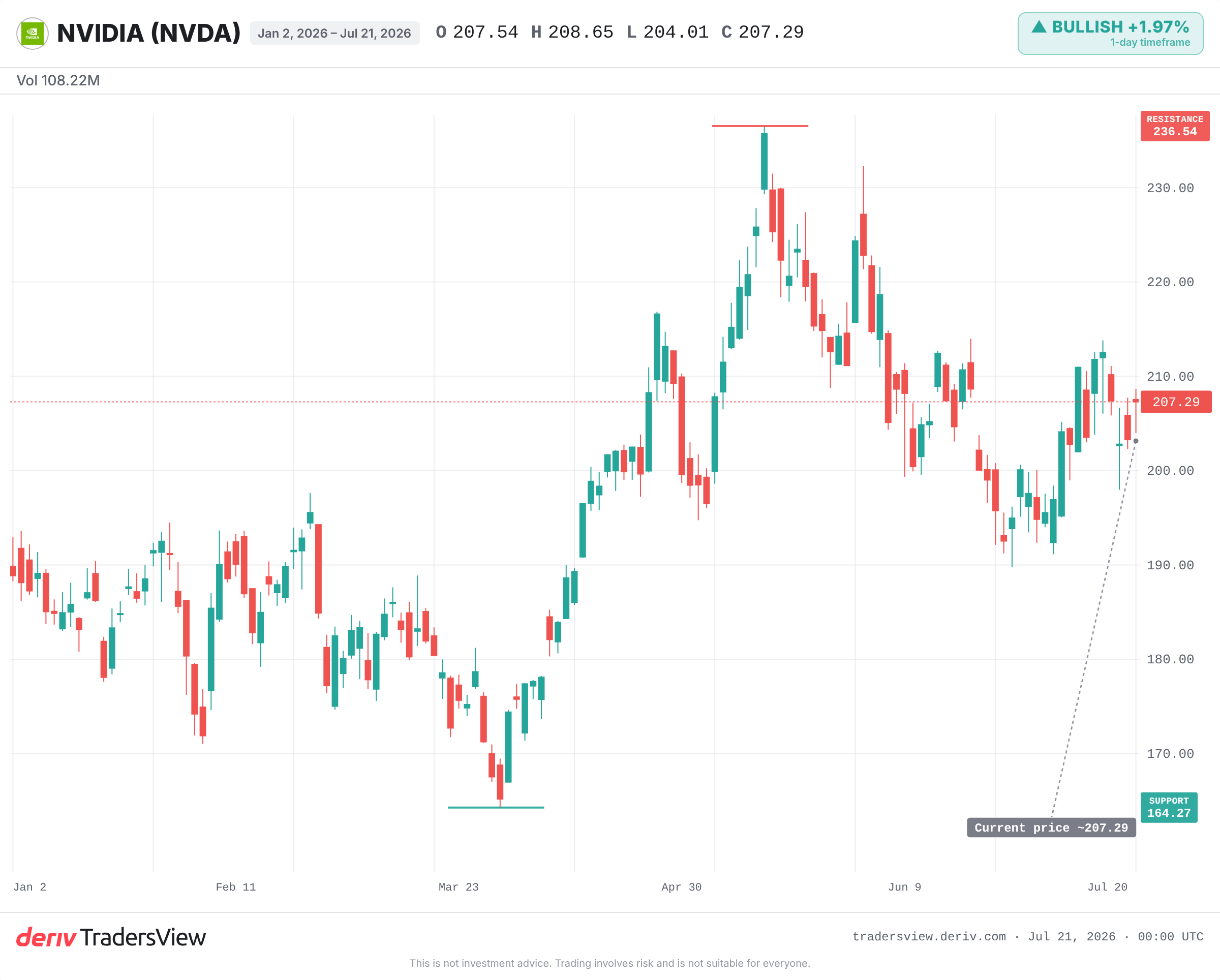
The evidence leans one way: early asymmetry is real, but it rewards the disciplined, not the hopeful. What to watch is whether Nvidia holds near its record high or gets rejected there, whether its early stakes appreciate, and whether any broad slowdown in AI spending compresses the valuation that makes all of this look so easy.
Frequently asked questions
Sega invested $5 million in Nvidia in 1995. Jensen Huang has said the company had about 30 days of cash left at the time and would not exist today without it.
Survivorship bias is the tendency to study only the companies or bets that succeeded, while ignoring the many that failed. It makes early winners look like skill when the full picture includes a high failure rate.
Most early bets return little or nothing, while a small number return many times the stake. A single large success can outweigh many failures, so the whole portfolio depends on the rare winner.
No. Apple has retaken the position as the world's most valuable stock, with the gap expected to widen. Nvidia also faces a shrinking list of buyers in China.
Nvidia has disclosed a 9.3% ownership stake in Nebius. It is an early position whose eventual payoff is not yet clear, mirroring the kind of bet that once saved Nvidia itself.