
Same war headline, silver fell harder than gold
Silver fell more than gold after a Middle East shock. The reason sits in the dollar, and the gold/silver ratio shows which force is really in control.
By the Deriv desk · 8 July 2026 · 3 min read

When one force hits every metal at once, the harder-hit asset shows you which force is really in charge. On 8 July 2026, silver fell sharply after a US strike near the Strait of Hormuz. Gold held up better. Same shock, different damage, and the gap is the lesson.
The obvious read is that war means buy metals as a haven. Yet silver dropped. The reason is not the metal. It is the dollar sitting between the headline and the price.
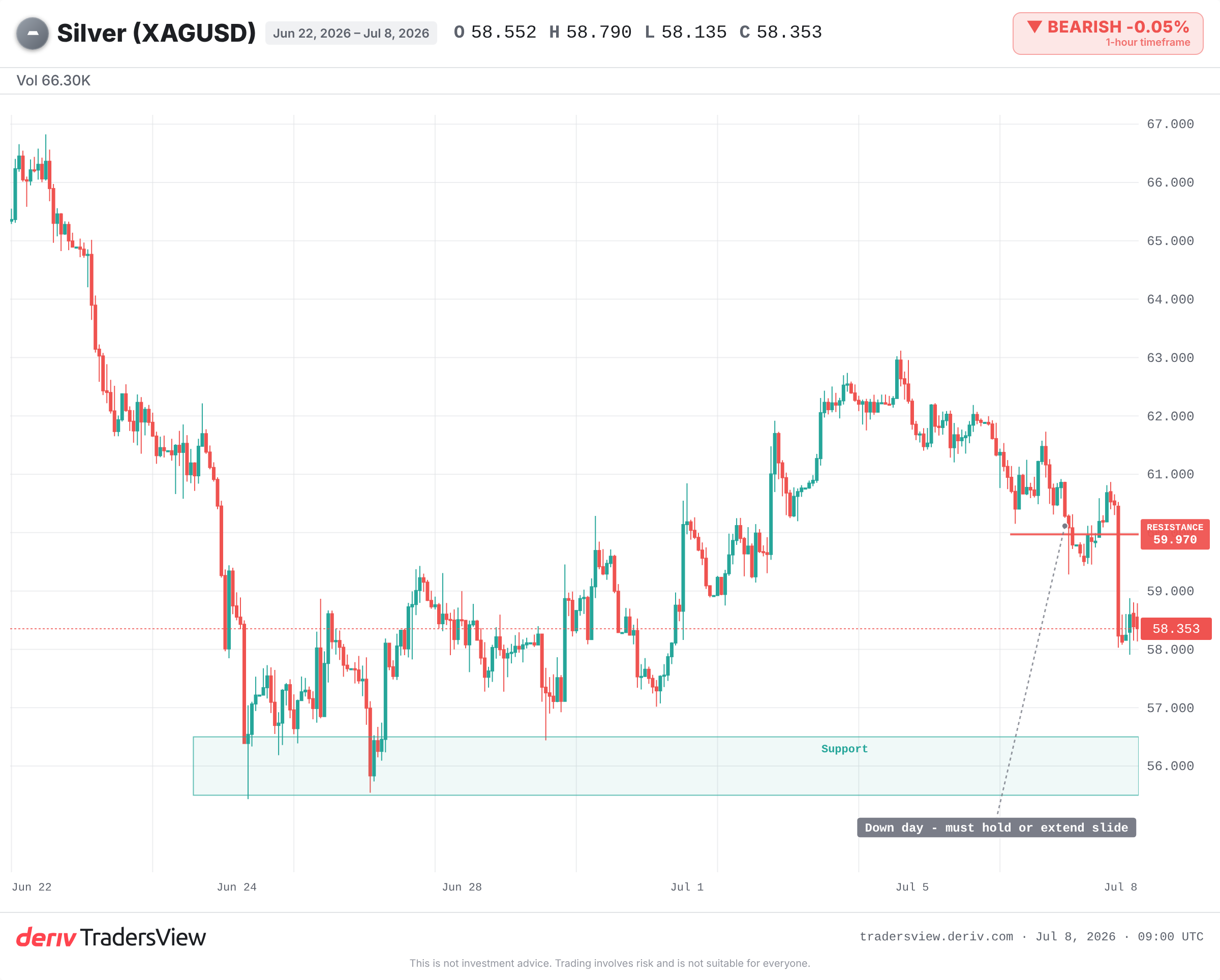
How a Middle East headline becomes a lower silver price
No ounce of silver changed hands because of the strike. The move ran through the dollar. A geopolitical shock sends frightened capital into US assets. The dollar strengthens. And silver is priced in dollars.
A stronger dollar raises the opportunity cost of holding a metal that pays no yield. When dollar assets pay more and the currency itself is bid, non-yielding silver looks less attractive. Traders sell first and ask questions later.
So the chain is straightforward: shock, safe-haven dollar bid, higher opportunity cost, lower metal price. The dollar is the middleman.
Why silver falls harder than gold on the same news
Gold and silver share the haven story, but silver carries a second job. Roughly half its demand is industrial. That makes it behave partly like a risk asset, rather than a pure store of value.
When fear hits, silver gets punished on both sides: the dollar bid drags all metals down, and the growth worry drags the industrial side too. Gold only wears the first hit. Silver wears both.
That is why silver is the higher-beta, more volatile sibling. It rallies harder in good times and falls harder in shocks.
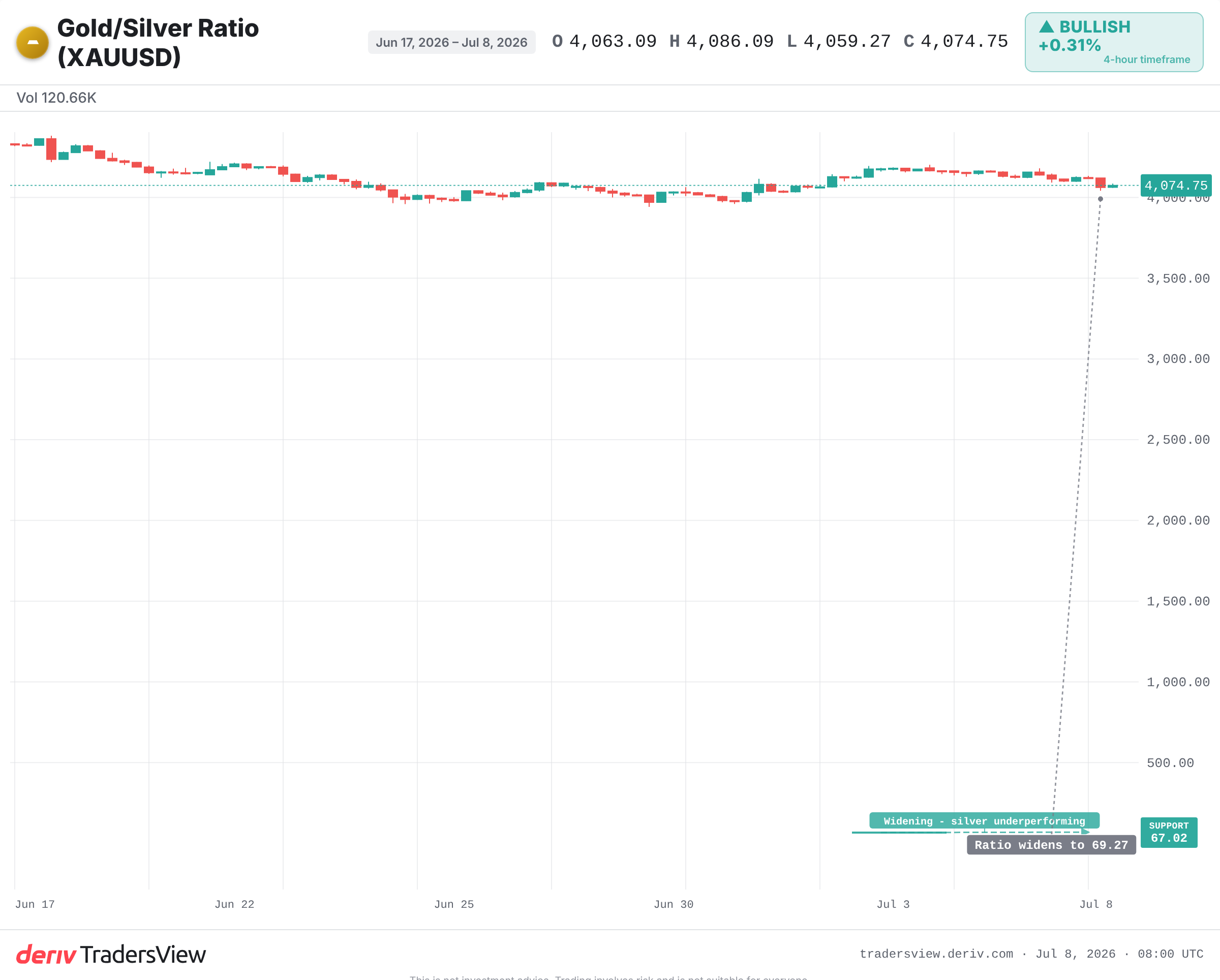
Reading the gold/silver ratio to see who is winning
The gold/silver ratio measures how many ounces of silver buy one ounce of gold. On 8 July it widened, meaning gold outperformed silver on the day.
A widening ratio in a sell-off is the sign that the dollar and growth fear, not a silver-specific problem, are driving the move. If the ratio narrows again, silver is catching a bid and the fear premium is fading.
Watch the ratio, not just the silver price. It separates a dollar story from a silver story.
Is this a silver problem or a dollar problem?
The evidence leans towards a dollar problem. This was sentiment, not a real supply disruption. Past Strait of Hormuz scares show the same pattern: metals sell on the initial dollar spike, then the move often fades once no oil actually stops flowing.
Two things support the read. Silver is still up strongly year-on-year despite the drop. And rate-hike expectations were easing, not tightening, so the opportunity-cost squeeze may not last if the dollar bid unwinds.
The risk cuts the other way too. Further escalation, or any genuine disruption to Strait flows, would extend the dollar bid and keep silver under pressure. A haven sell-off can persist as long as the fear holds.
What to watch: the dollar's direction, the gold/silver ratio, and whether silver holds its recent support zone or breaks below Tuesday's close. The metal is reacting to a force outside itself. Track that force, and the price makes sense.
Frequently asked questions
Not reliably. In the immediate shock, capital often rushes into the dollar, which can drag non-yielding metals down. But if the fear premium holds or supply is genuinely disrupted, silver can also rally. The dollar's direction usually decides the first move.
It is how many ounces of silver it takes to buy one ounce of gold. A rising ratio means gold is outperforming silver, which often signals a dollar or growth-fear driven move rather than a silver-specific one.
About half of silver's demand is industrial, so it partly trades like a growth-sensitive asset. That extra exposure makes it swing harder than gold in both rallies and sell-offs.
The Strait carries a large share of global oil flow, so threats there move commodity sentiment and the dollar at once. Metals often sell on the initial dollar spike, then the move can fade if no actual supply disruption follows.