
Netflix says AI cuts costs, then plans to spend more
Netflix uses AI to cut production costs while raising 2026 content spend to $20bn. Why cheaper output means more spending, and what really moved the stock.
By the Deriv desk · 27 July 2026 · 3 min read

When a technology makes something cheaper to do, companies usually do more of it. So Netflix leaning on AI to cut production costs while raising 2026 content spend to roughly $20 billion is not a contradiction. It is the normal response to cheaper output.
The market still sold the stock hard after Q2 earnings. Understanding why means separating the efficiency story from what actually moves the share price.

Why cheaper production leads to more spending, not less
The instinct is simple. If AI trims the cost of making a show, the budget should shrink. It rarely works that way.
When something gets cheaper, appetite grows to match. Netflix does not want a smaller content budget. It wants more shows, in more languages, to keep people watching. Lower cost per title is fuel for a bigger slate, not a smaller bill.
This is why the two headlines coexist. "AI saves us money" and "we are spending 10% more next year" describe the same strategy, viewed from different ends.
The 150-year-old idea behind the paradox
In the 19th century, economist William Stanley Jevons noticed something odd about coal. More efficient steam engines did not cut total coal use. They raised it. Cheaper energy opened up new uses, so demand climbed.
The same logic runs through modern streaming. Across 2023 and 2024, studios talked about discipline and efficiency while the biggest players kept lifting content budgets to defend engagement. Efficiency talk and rising absolute spend are not opposites at scale. They travel together.
What the market actually judged Netflix on
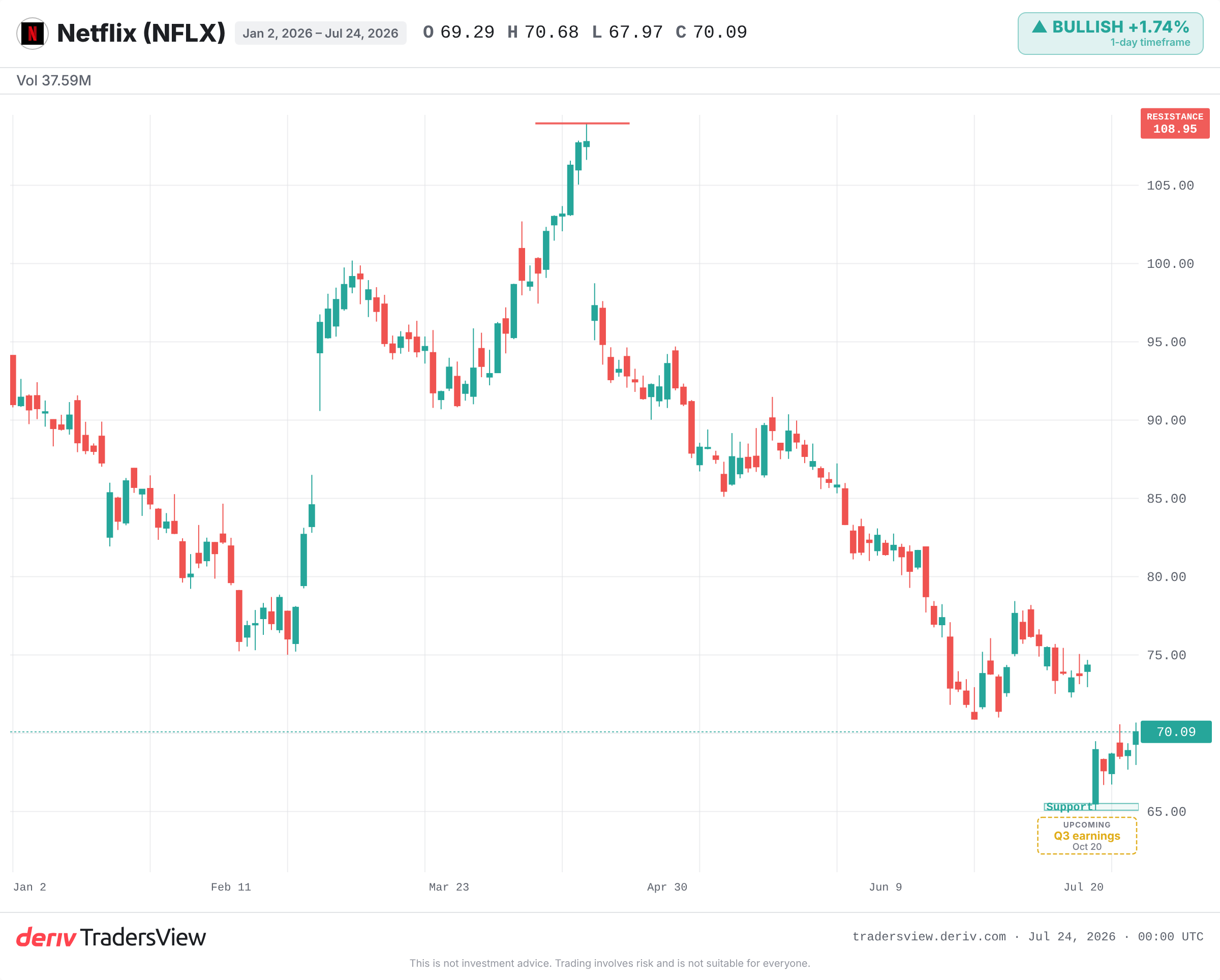
The AI angle barely featured in the sell-off. Netflix dropped sharply in pre-market trading after Q2, falling more than 11% from the prior close.
The reasons were growth, not costs. Q2 revenue came in slightly below estimates. Q3 guidance landed under consensus. Several analysts flagged weaker engagement disclosure and a shortfall against Netflix's own 2030 targets. Baird cut its target to $90 from $120.
The market prices a growth stock on growth. An efficiency story does not offset decelerating revenue. It never has.
Does more content spend justify the reinvestment story?
Here the bull and bear cases split cleanly. The bull read: the stock now trades near its 2026 low, far below its all-time high, on a forward multiple that implies almost no growth despite resilient margins. If the extra spend converts into engagement, the reinvestment pays off.
The bear read is harder to dismiss. If content spend rises but revenue growth keeps slowing, the extra billions are just higher costs. The whole reinvestment framing depends on one thing: output turning into subscribers and watch time.
Netflix has reset before. It lost subscribers in April 2022, the stock collapsed, then ad tiers and a password crackdown re-accelerated revenue over two years. A growth scare can precede a genuine turnaround. Timing the bottom was punishing then, and would be now.
What to watch next
- Whether Q3 revenue beats the guide, or confirms the slowdown.
- The technical floor cited near $65. A break below suggests the market is not buying reinvestment.
- Margins as spend rises. If they slip, the reinvestment case breaks.
- Any sign the bigger slate lifts engagement rather than just costs.
The efficiency headline is real. It is also a distraction. Judge Netflix on whether $20 billion of content buys back its growth, because that is what the market is judging too.
Frequently asked questions
Netflix has framed AI as a tool to lower production and operating costs. The company treats those savings as room to expand its content slate rather than as a way to shrink its overall budget.
The drop was driven by growth concerns, not costs. Q2 revenue came in slightly below estimates, Q3 guidance was under consensus, and analysts flagged weaker engagement disclosure and a shortfall against Netflix's 2030 targets.
It is the observation that making something more efficient often raises total consumption of it rather than lowering it. Cheaper coal, or cheaper content production, expands demand instead of cutting the bill.
Not automatically. Extra spending only helps if it converts into more engagement and subscribers. If revenue growth keeps slowing while spend rises, the added billions read as higher costs rather than reinvestment.