
Is Burry's Nvidia call a bet or a hedge?
Michael Burry is short Nvidia and buying Nvidia calls. The calls are insurance on a bearish bet, so read the whole position, not the headline.
By the Deriv desk · 27 August 2026 · 4 min read

Michael Burry is short Nvidia and buying Nvidia calls at the same time. That is not a change of heart. It is one bearish position with insurance attached.
The headline writes itself: the man behind The Big Short is buying calls, so he must be turning bullish. Read the whole position and the story flips. His short stock bets run to over a fifth of his book. The calls are a small slice bought to cap the loss if the short keeps going against him.
One leg of a trade rarely tells you what a trader thinks. The same buy can be a bet, or the insurance on the opposite bet. You have to read the whole position.
Why buying a call can mean you are bearish
Because the call is insurance on a short, not a bet the stock rises. Paired with a large short, it pays out on the one move that hurts the short most, so it caps the loss rather than expresses conviction.
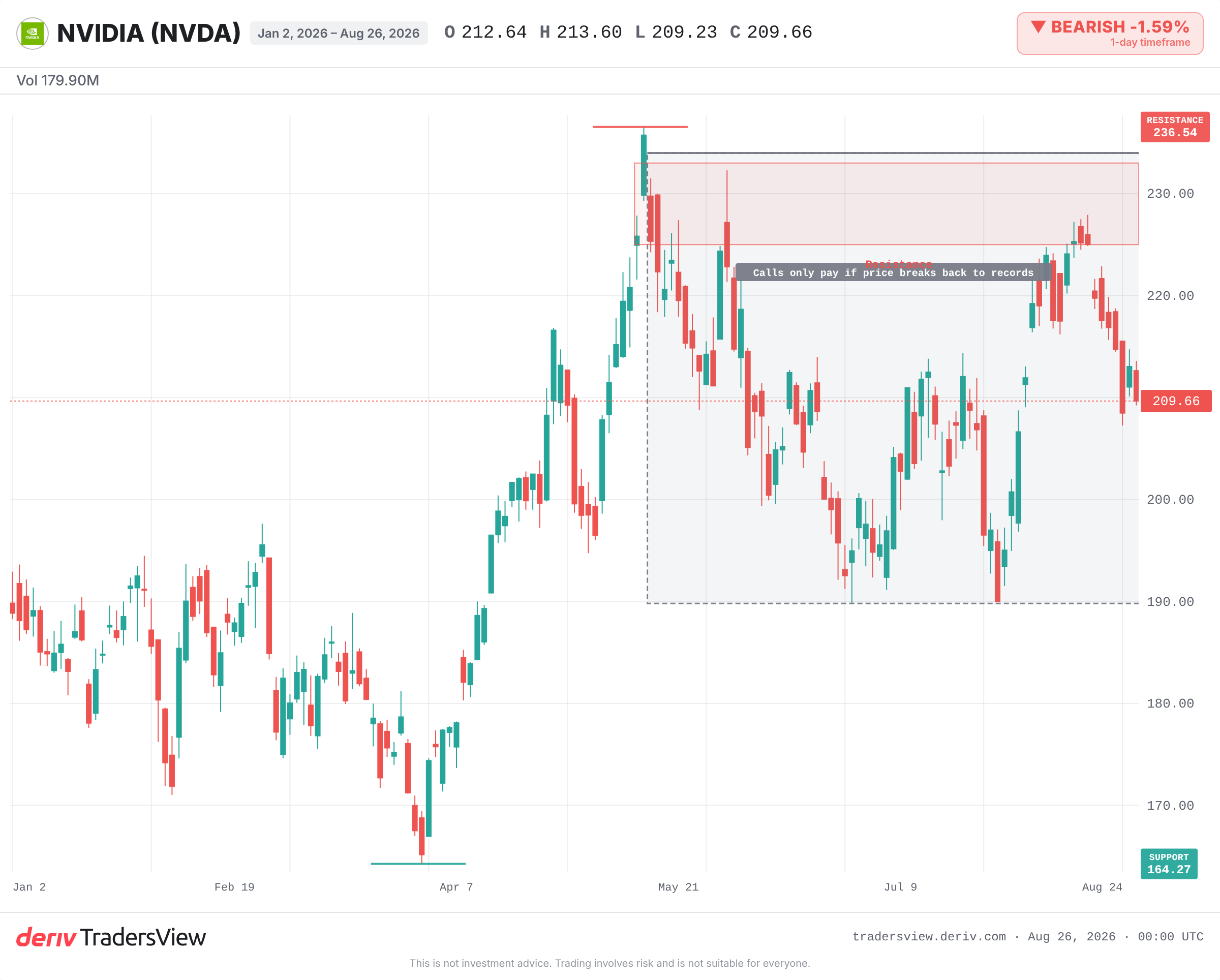
If you are short Nvidia and the stock climbs towards its highs, you lose. A call bought above the current price pays out on exactly that move. It offsets part of the short's pain. The call is not conviction. It is a brake.
Burry has done just that. He holds December calls with strikes in the mid-to-high $200s, worth a few per cent of his portfolio. Nvidia's all-time high sits just above that zone. The calls only start earning if the stock breaks back to records, which is precisely the scenario his short cannot survive unhedged.
How the premium offset works on a short
The cost of the call, its premium, is the price of the insurance. If Nvidia falls, the short profits and the premium is the small toll paid for cover you did not need. If Nvidia rallies past the strike, the call's gain offsets part of the short's loss. The premium is a known, capped cost that trades away the worst tail of the short.
The clue is in the size, not the direction
Look at which leg dominates. The short is the large, primary bet. The calls are the small, secondary cushion. A trader who had turned bullish would shrink the short, not layer protection on top of it.
This is also where 13F filings mislead. They report options at notional value, not at cost or real exposure, and they can be up to 45 days stale. Burry's 2021 Tesla puts looked huge on paper and were gone within two quarters. A snapshot of one position, weeks old, is not a live read of intent.
The honest other side
There is a real counter-case. Burry himself has called Nvidia "wildly undervalued on paper" given its compressed PE, even as he warns the stock is "treading water". Nvidia backs the bull view with numbers: second-quarter revenue jumped 106% year over year, with guidance pointing higher again.
Note that Burry has not publicly labelled the calls a hedge or a bet. The read here is inferred from the structure and the sizing, not from a direct statement. So the calls could reflect genuine two-way doubt, not pure insurance. What would settle it is the next filing. If the call position grows while the short shrinks, the hedge read weakens and the bullish read gains ground. Until then, the balance of evidence leans towards insurance, because the short still dwarfs the calls.
The takeaway and what to watch next
On the evidence available, Burry's Nvidia position reads as bearish with insurance, not a turn to the bulls. The short dwarfs the calls, and he has not said otherwise. So the next step is simple: wait for the next 13F before you read any change of mind into it, and weigh these signals against each other.
- Whether Nvidia breaks back above its all-time high, the level that pressures the short and pays the calls.
- The next 13F: a bigger call slice or a smaller short would revise the story.
- Nvidia's next revenue print against guidance. A beat feeds the bulls; a miss feeds the short.
- Any direct word from Burry on whether he cut or added to the short.
The wider lesson outlasts this trade. A single disclosed position is a fragment. Before you copy anyone's conviction, check whether the trade you are staring at is the bet or the hedge on the bet.
Frequently asked questions
A hedge is a second position taken to reduce the loss on your main one. It usually costs money or caps upside, in exchange for protection if the main bet moves against you.
US 13F rules require managers to report option positions at their underlying notional value, not at cost or actual risk exposure. This can make a small hedge look far larger than the capital truly at stake.
A 13F is filed up to 45 days after the quarter ends, so the positions shown may be weeks old. A manager could have added to, cut, or closed a position entirely before you ever see it.
Yes. Traders often pair a short stock position with call options as protection. If the stock rises, the short loses but the calls gain, softening the blow.