
Gold pays nothing, so what actually sets its price?
Gold pays no interest, so its price tracks the dollar and real yields. This is why a safe haven can fall even as inflation fears revive.
By the Deriv desk · 8 July 2026 · 3 min read

Gold has no yield of its own, so its price is a scoreboard for two rival forces: the dollar and real interest rates. When both firm up, gold tends to fall, however strong the long-term story sounds.
You can watch this live right now. Gold pulled back for a second session, trading near the low $4,120s, as Treasury yields firmed and the dollar held its ground. The metal is not weak because the bull case broke. It is weak because holding it just got more expensive.
Why a stronger dollar and higher yields drag gold down
Gold pays no interest. A US Treasury bond does. So the two compete for the same cautious capital.
When real yields (the return after inflation) rise, a bond starts to look better than a metal that just sits there. The cost of holding gold goes up. Capital rotates out. A firmer dollar adds a second push, because gold is priced in dollars, so a stronger dollar makes it dearer for everyone else.
That is the whole mechanism: gold competes with yield, and it loses when yield wins. This is why a "safe haven" can drop while inflation fears revive. Inflation worry alone is not enough. What matters is inflation minus the interest rate you could earn instead.
The round trip from $3,941 and back
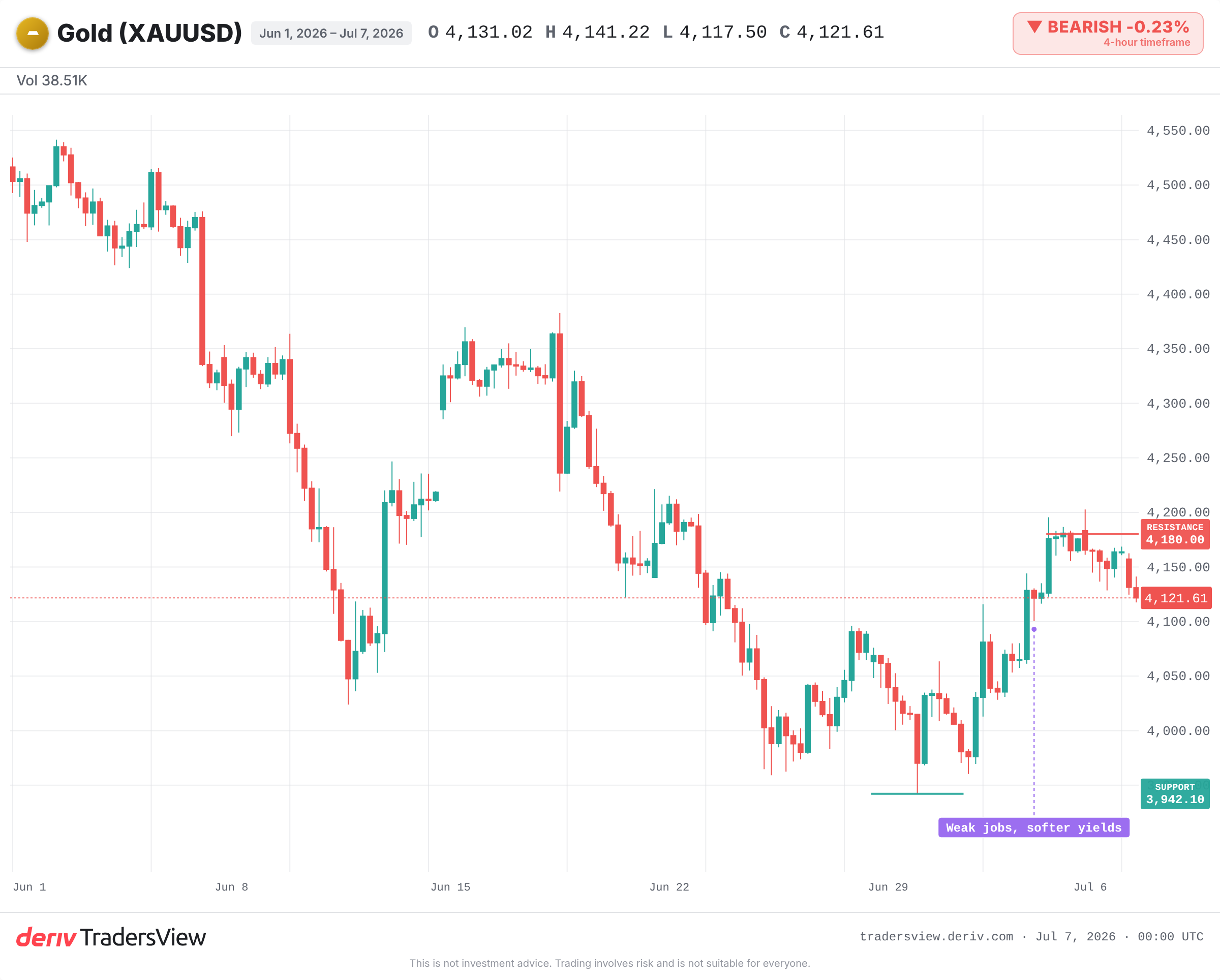
Look at the recent path. Gold sank to a seven-month low near $3,941 at the end of June as the dollar firmed. Then weak US June jobs data landed, near-term rate-hike odds eased, and the metal surged back above $4,100.
It ran into resistance at the 50% retracement around $4,180 and stalled. Yields and the dollar steadied again. Gold slipped back towards the $4,120s.
Same asset, same week, two directions. The driver was never gold's own story. It was whether yields and the dollar were rising or falling.
Does history back the yield link?
It does, repeatedly. In the 2013 taper tantrum, real yields spiked as markets braced for the Federal Reserve to slow bond-buying. Gold fell hard through the year despite live inflation worries.
The 2022 rate-hiking cycle told it both ways. The dollar hit two-decade highs and real yields turned sharply positive. Gold slid from above $2,000 towards the $1,620s even with 40-year-high inflation. Then, once the dollar and yields peaked, gold rebounded. The mechanism runs in reverse just as cleanly.
The floor under the fall
There is an honest other side. Structural demand can override the yield story for a while.
Persistent central-bank buying and safe-haven flows have put a floor under gold even when the macro backdrop looked hostile. That is why this pullback has held well above the June low, not collapsed through it.
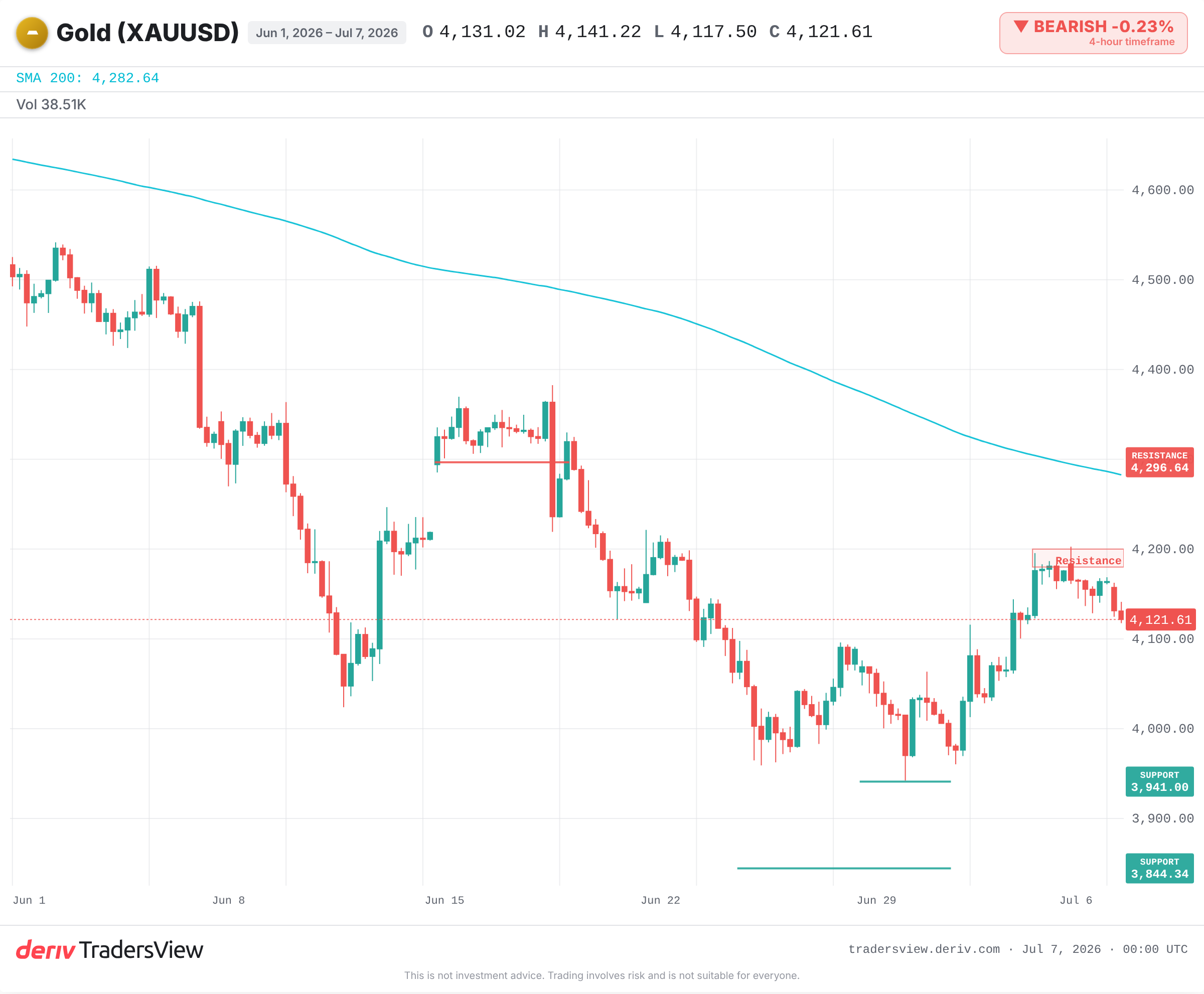
The bearish read is right only while the dollar and real yields keep firming. Should this week's FOMC minutes read dovish, or growth soften and yields roll over, the same mechanism reverses. Gold can push back towards the $4,180 to $4,296 resistance band.
What to watch next
- The FOMC minutes for signals on rate-cut timing, which move real yields.
- The direction of real (inflation-adjusted) Treasury yields and the dollar.
- Whether price holds below the $4,180 to $4,200 resistance or breaks above the 50-day average.
- Support near the prior $3,941 low and $3,844; a clean break signals deeper downside.
Trading carries risk, and this is analysis, not advice. But the frame is durable: when gold moves, check the dollar and real yields first. Most of the time, they wrote the story before gold did.
Frequently asked questions
Real interest rates are yields after subtracting inflation, so they show the true return on holding a bond. When they rise, an interest-paying asset beats a metal that pays nothing, so gold tends to weaken.
Inflation alone does not lift gold. What matters is inflation minus the interest rate you could earn instead. If central banks raise rates faster than inflation, real yields rise and gold can fall despite high inflation, as it did in 2022.
Yes. Steady central-bank purchases add persistent demand that can put a floor under gold even when the dollar and yields are firming. It rarely reverses a trend on its own, but it can cushion falls.
Gold is priced in dollars, so a stronger dollar makes it more expensive for buyers using other currencies, which tends to dampen demand and weigh on the price. A weaker dollar does the opposite.