
Why the First Big IPO in a Category Sets the Price for Every Rival Behind It
When the first company in a category lists, its early trading becomes a price test for every rival in the queue. How SpaceX's slide shapes OpenAI's timing.
By the Deriv desk · 26 June 2026 · 4 min read

When the first company in a category goes public, the market treats its early trading as a price test for everyone still in line. A weak debut does not just hurt one stock. It tells the next high-valuation name whether the door is open or closing.
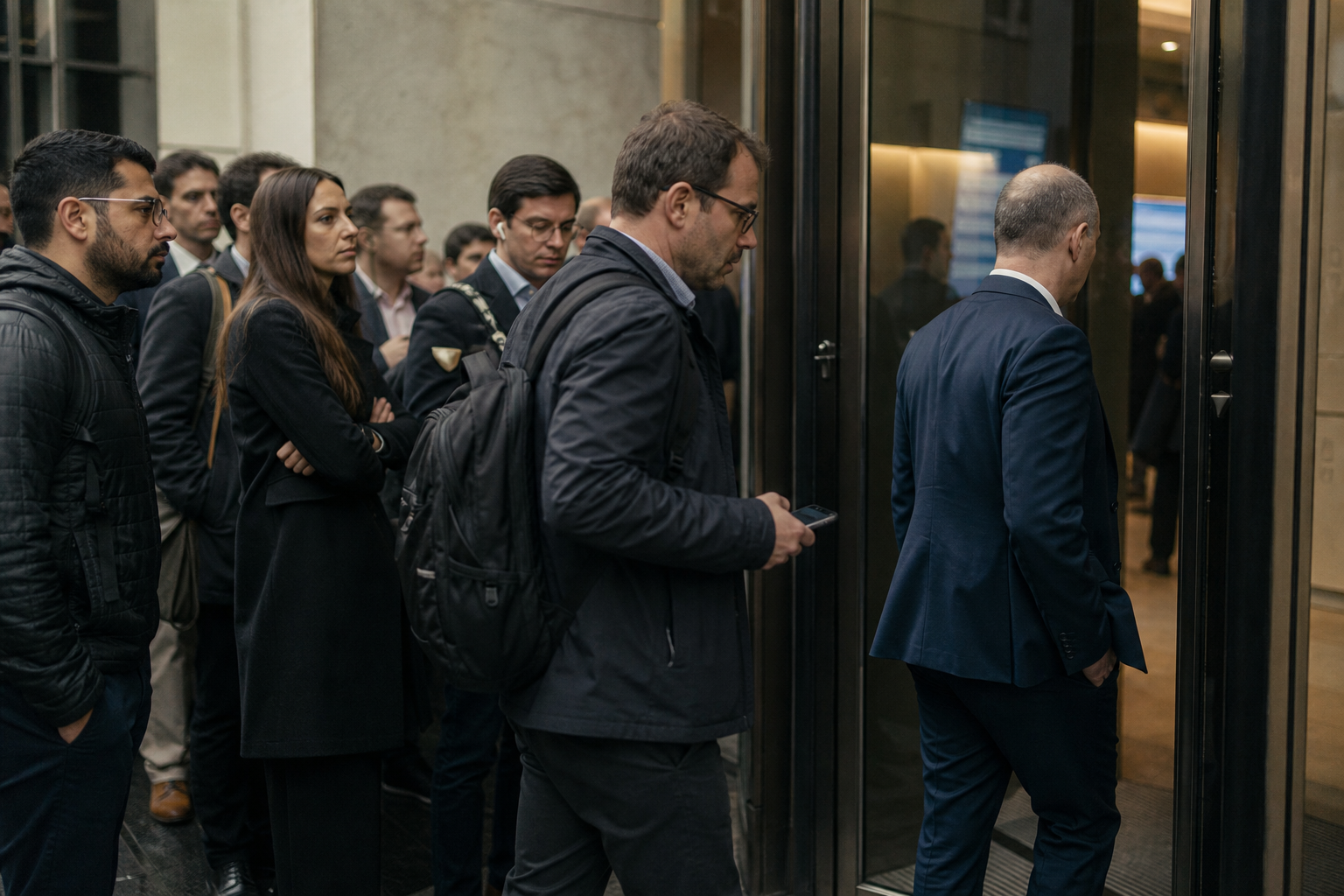
That is the story behind SpaceX right now. Its shares have cooled sharply since the 12 June debut. And OpenAI, reportedly weighing a 2026 listing, is now leaning toward 2027 instead.
Why a cooling IPO freezes the pipeline behind it
Private valuations are guesses. A listing turns the guess into a real, public number that anyone can trade.
So when a marquee name lists, every similar company watching learns something concrete: what public investors will actually pay. SpaceX is the first big test, so its tape becomes the reference price for OpenAI, and for the rest of the high-value tech queue.
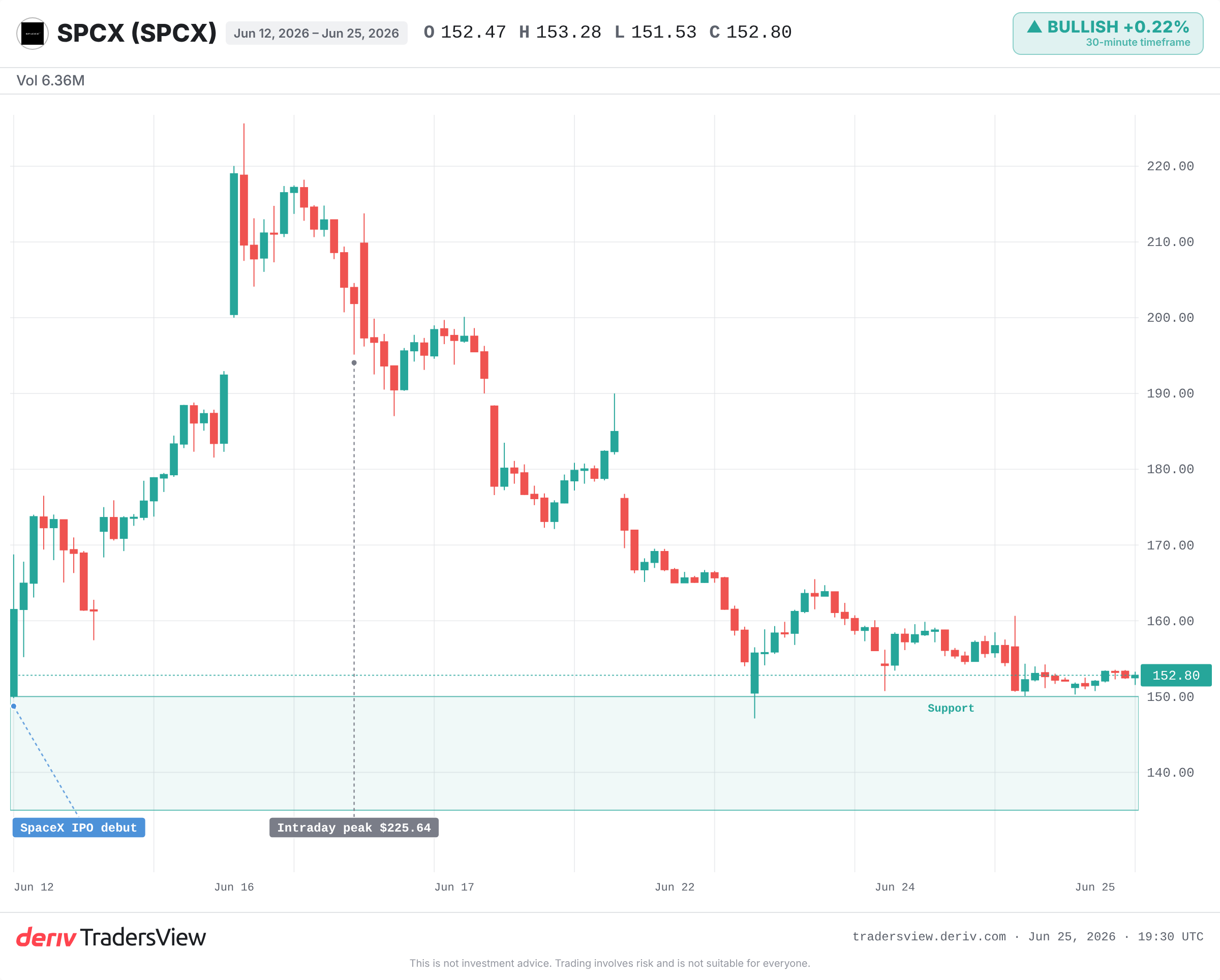
SpaceX priced at $135 and opened at $150 on 12 June. It then spiked above $225 within days before sliding back toward $153 by 23 June. The market value swung from roughly $2.9 trillion at its peak to about $2.03 trillion.
Does a falling first-mover automatically doom the next IPO?
This pattern is not new. Lyft's weak 2019 listing soured the mood for Uber, which then slid on its own debut. Several richly-valued names delayed or downsized.
Weeks later, WeWork pulled its IPO entirely once public investors balked at the valuation. The chill spread across every cash-burning unicorn in the queue.
Rivian told the same story in 2021. After its blockbuster debut faded, the broader electric-vehicle and SPAC pipeline cooled, and a wave of planned listings was shelved or repriced.
The mechanism repeats: the first cooling listing reprices appetite for the whole cohort, not just itself.
Froth unwinding or a real verdict?
The obvious read is that a falling SpaceX dooms OpenAI's timing. That read can be too quick.
A drop of roughly a third from an extreme post-IPO spike can simply be froth unwinding back toward a sane price. That is not the same as the market rejecting the business.
The tell is the level. The IPO and open zone sits around $135 to $150. Hold that area, and the slide looks like normal cooling; break clearly below it, and early buyers are underwater, which is a harder signal for the next deal.
OpenAI's own numbers add caution. Advisers point to about $13 billion in revenue against a roughly $21 billion net loss, set against a $1 trillion target. Public investors may not fund that gap on demand alone.
What to watch next
- Whether SPCX holds the $135 to $150 IPO zone or breaks below it.
- Any official word from OpenAI confirming or denying a 2027 delay.
- Signs that other large private tech firms are delaying or repricing listings.
- Lock-up and volume dynamics as early SpaceX holders become free to sell.
The evidence leans toward caution: a soft first mover does tighten the window for the names behind it. But a window that narrows is not a window that shuts. If SpaceX stabilises and AI infrastructure demand stays strong, a 2026 listing could still happen, and the delay talk would look like prudence, not rejection.

Frequently asked questions
A lock-up restricts early holders and insiders from selling for a set period after listing. When it expires, a wave of new supply can hit the market and pressure the price, which is why traders watch lock-up dates closely.
A private valuation comes from negotiated funding rounds among a small group of investors. A public market value is set continuously by anyone able to buy or sell the listed shares, so it can move far from the last private mark.
A greenshoe lets underwriters sell additional shares beyond the original offering if demand is strong. It can raise more capital and helps stabilise the price in early trading.
Delaying lets a company wait for better market conditions or a stronger comparable listing before pricing its own deal. It keeps the option open without locking in a weak valuation during a soft window.