
Chips sell off first: warning or just profit-taking?
Why semiconductors lead the market up and down, when a chip selloff signals broad weakness, and when a single name breaks away on its own demand.
By the Deriv desk · 8 July 2026 · 3 min read

When semiconductors sell off hard, the broad market often follows, because chips sit upstream of every tech story and get priced ahead of everyone else. That is the pattern behind the mega-cap tech slide hitting the Nasdaq. The harder question is whether this drop is an early warning or just profit-taking in the market's most crowded trade.
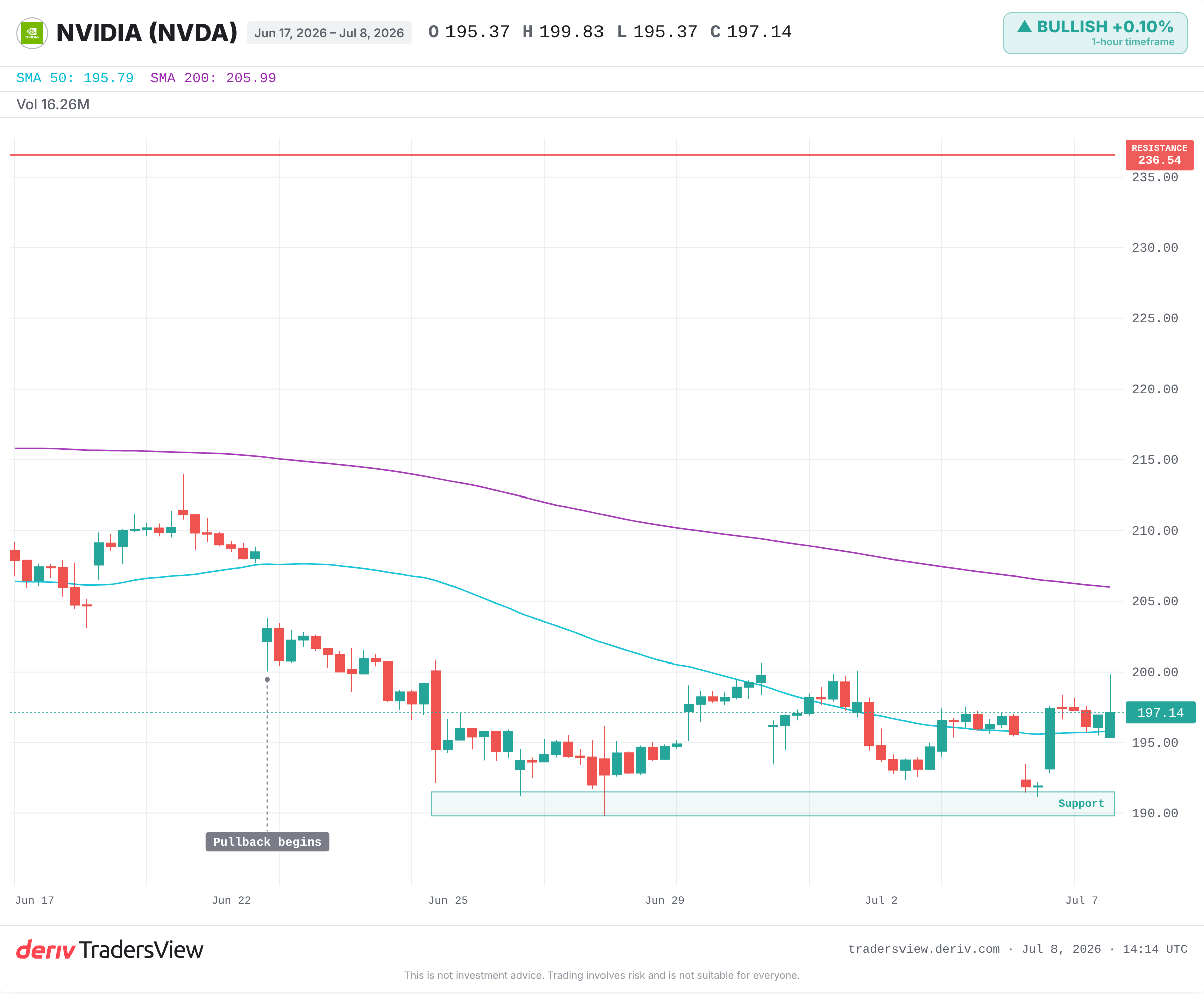
Why chipmakers move before the rest of the market
Chips are the raw material of modern technology. Every AI model, cloud service and phone runs on them. So chip orders reflect what companies expect to build months from now, not what they are selling today.
That makes semiconductors the most forward-priced link in the chain. When investors turn cautious, they sell the most cyclical, most expensive names first, and that tends to be chips. The rest of tech often catches up later.
Does a chip selloff really lead the whole market lower?
History says it can. In late 2021, semiconductor stocks peaked and rolled over ahead of the wider market. The Nasdaq and S&P 500 confirmed the downtrend months later, and chips were among the hardest hit through 2022.
Mid-2018 told a similar story. Semiconductors dropped sharply on trade and demand fears well before the broad market fell into late December. The most severe case was 2000, when chip and hardware names cracked as internet build-out spending proved unsustainable, ahead of a multi-year tech bear market.
In each case, chips weakened first and the index followed. The signal preceded the pain by weeks, sometimes months.
When a single chip name breaks away on its own demand
The pattern cuts both ways. After the 2018 scare, chips also led the recovery in 2019 as demand reaccelerated. The same group that leads down often leads back up.
This is the breakaway. A chip pullback after a strong run is frequently just profit-taking, not a demand signal. If end demand stays firm and orders keep flowing, a leader can grind higher even while the group wobbles. Its own cycle overrides the crowd's mood.
The clue is where the selling stops. Contained to chips, it looks like rotation. Spreading into software, financials and cyclicals, it looks like something broader.
What to watch to tell the two apart
The real demand check comes from the customers, not the chipmakers. The big cloud spenders, Microsoft, Alphabet, Amazon and Meta, guide their capital spending on earnings calls. That guidance is what ultimately fills chip order books.
- Breadth: is the selling broad, or stuck in a few crowded names?
- Spread: does weakness move beyond semiconductors into software and cyclicals?
- Guidance: do hyperscalers hold or cut their spending plans?
- Support: does Nvidia hold well above its 52-week low zone or break recent support?
The evidence leans towards treating a sharp chip selloff as a signal worth respecting, not ignoring. But it is only confirmed if the drop broadens, breadth deteriorates and chip customers actually soften their spending. Until then, a wobble in the most-crowded trade can be exactly that. History rewards watching the follow-through, not the first red day.
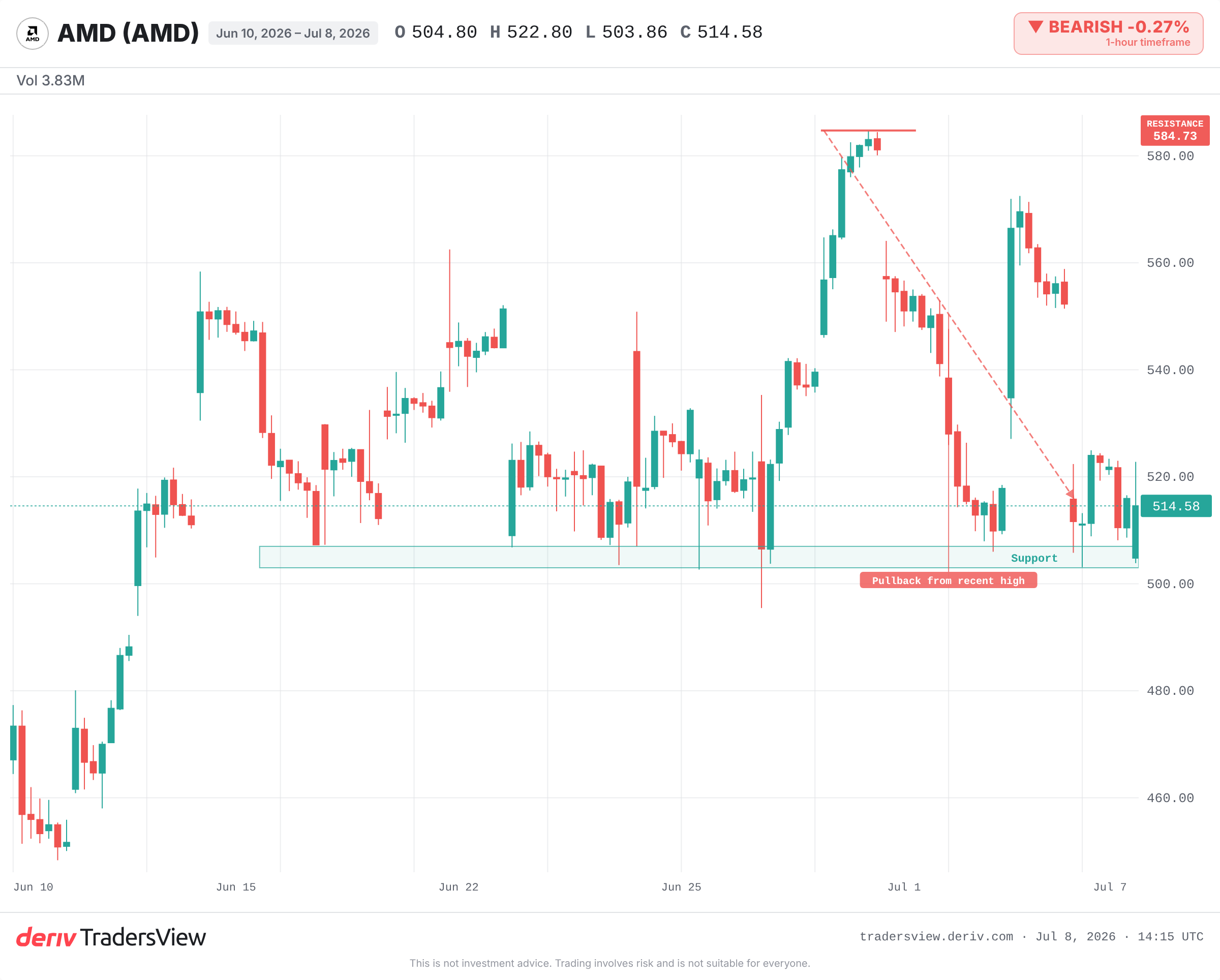
Frequently asked questions
The SOX is the Philadelphia Semiconductor Index, a benchmark tracking major chipmakers. Traders watch it as a gauge of the whole semiconductor sector and, by extension, an early read on technology demand.
Chip demand rises and falls with the wider economy and the tech investment cycle. Orders surge when companies expand and drop when they pull back, so chip earnings swing more sharply than steadier businesses.
The big cloud firms are among the largest buyers of advanced chips. Their capital-spending guidance on earnings calls signals future orders, so firm guidance supports chipmakers and cuts can pressure them.
No. Sharp drops in crowded tech names are often profit-taking or rotation rather than a lasting top. A broader warning usually needs weakness to spread across sectors and market breadth to deteriorate.