
Can a single shipping lane spike oil prices worldwide?
A threat to the Strait of Hormuz can lift oil prices worldwide. Here is why past spikes faded unless barrels actually stopped moving.
By the Deriv desk · 27 July 2026 · 3 min read

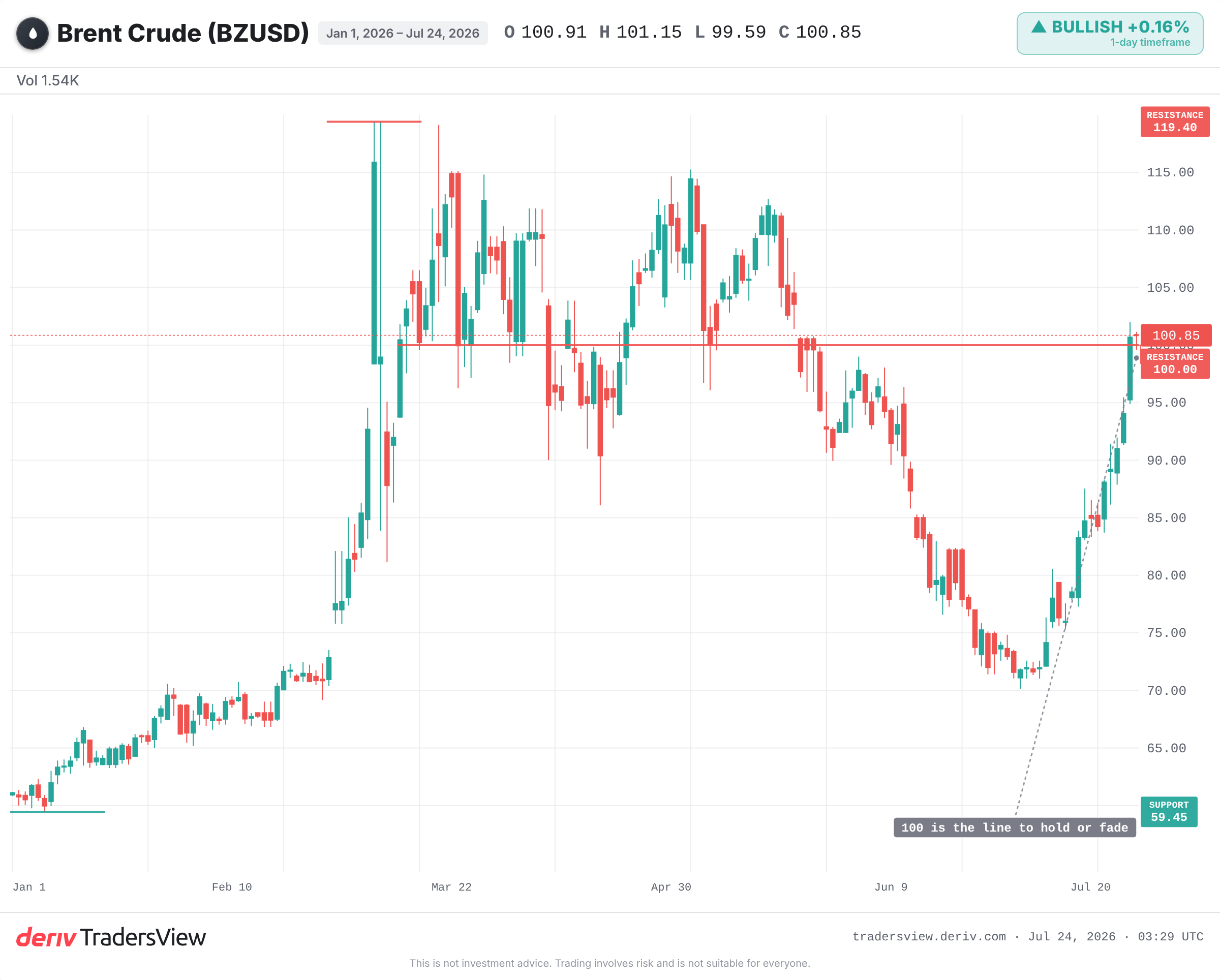
A threat to the Strait of Hormuz can push up oil prices everywhere, because about a fifth of the world's shipped oil passes through that one lane. A fresh US move on Iran brought those fears back this week. Brent crude climbed back towards $100 a barrel.
Why one narrow lane can move the whole market
Oil has one global price. A barrel costs about the same whether it ships from Texas or the Gulf, because buyers can buy it from anywhere. So a threat to the biggest supply route worries every buyer at once.
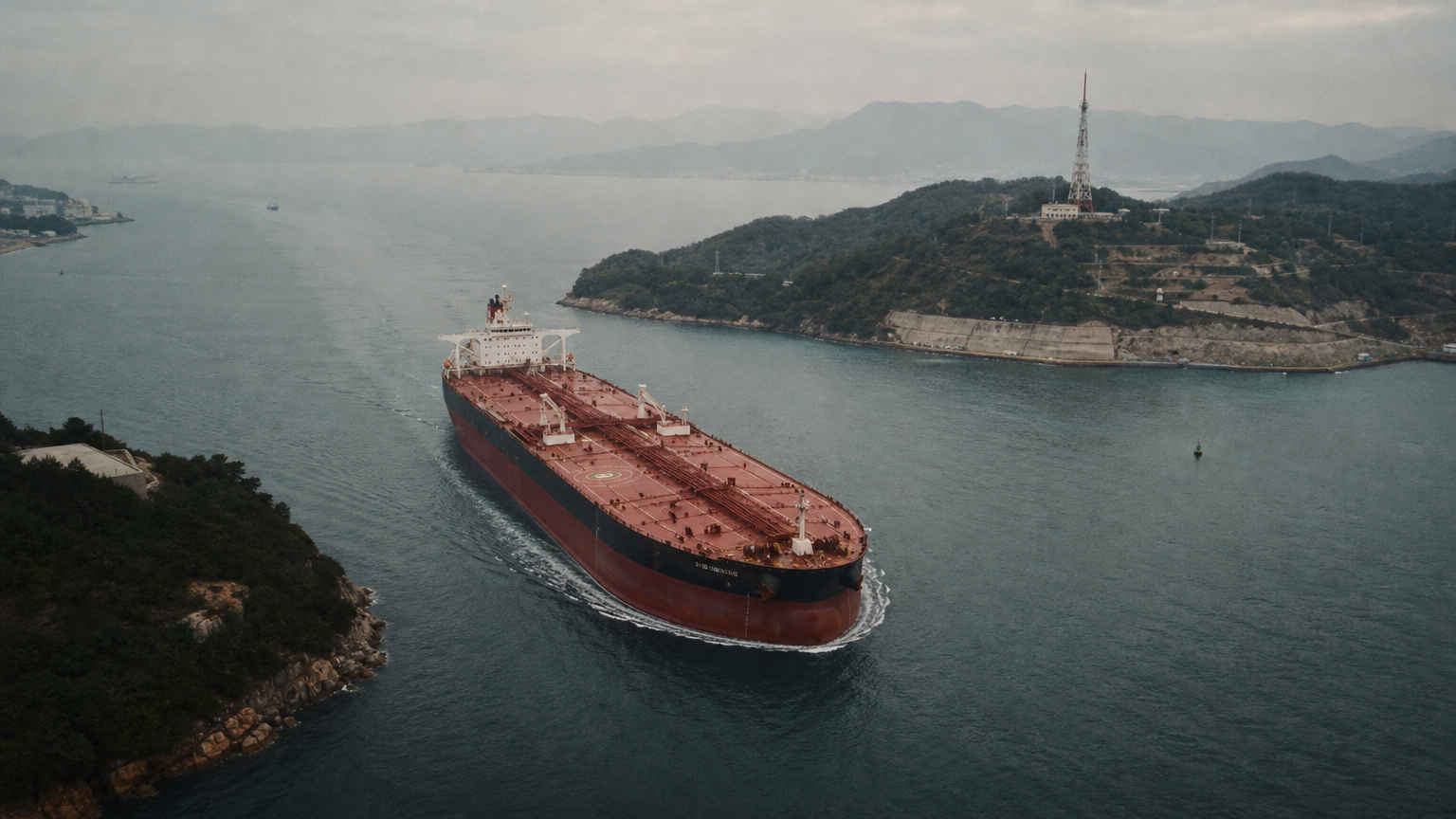
The Strait of Hormuz is that route. It is a narrow gap that carries a big share of the world's oil tankers. Threaten the lane, and you threaten the price at every petrol pump, not just the nearby ones.
That is how a local event becomes a global price jump. A US move on Iran is read as a risk to oil flowing through Hormuz. The market prices in the fear before any oil actually stops moving.
Fear is not the same as a real shortage
This is what decides whether a price jump lasts. A rise on a headline is fear: buyers paying more just in case. A lasting rise needs real barrels to go missing.
History makes the point. In September 2019, drone and missile attacks knocked out about half of Saudi oil output, the biggest single loss on record. Brent jumped around 15% in a day. Within weeks it gave most of that back, once Saudi Arabia fixed production faster than expected.
Russia's invasion of Ukraine in 2022 pushed Brent towards $130. It fell back over the next months as reserves were released and oil found new routes. Fear-driven spikes fade unless the shortage is real and lasting.
The strait that gets threatened but never closes
Iran has threatened to close Hormuz before, most notably in 2011 and 2012. Oil stayed pricier for a while, but the strait stayed open. The extra price rose and fell with the words, not any real blockage.
There is a simple reason. Every country that ships oil through the lane, Iran included, wants it open. Closing it would cut off their own income too.
Watch what the big buyers do
Reports suggest some large buyers, notably China, are acting as if this jump will not last. They seem to be betting on plenty of supply, spare output from OPEC+, and rising production elsewhere.
What a big importer does is often a better guide than the scary headlines. If China keeps buying steadily and stockpiles grow, that points against the scare.
What to watch next
For prices to keep rising, tanker traffic has to actually stop, not just be threatened. For prices to fall back, oil just needs to keep flowing until the fear fades, as it did after 2019 and 2022.
- Any real disruption to Hormuz traffic, versus threats alone.
- OPEC+ decisions on releasing spare production.
- Whether China keeps buying and building stockpiles, a hint of what big buyers expect.
- Whether Brent holds above $100 or slips back towards the year's lows.
The evidence leans towards not counting on the spike lasting. Every past Hormuz scare has faded without a closure. But the risk cuts both ways: if the lane ever really shuts, the move up would be fast and sharp. Prices can swing either way, and a threat is not a forecast.
Frequently asked questions
Roughly a fifth of the world's seaborne oil moves through the strait, which is why any threat to it affects prices globally rather than just in the region.
No. Iran has threatened to close it several times, notably in 2011 and 2012, but it has stayed open. Producers that ship through it, including Iran, have a strong incentive to keep it flowing.
The September 2019 attacks knocked out about half of Saudi output and Brent spiked around 15% in a day. Prices gave back most of that within weeks once Saudi Arabia restored production faster than expected, because the barrels were not permanently lost.
Spare capacity is oil that producers can bring to market quickly. If OPEC+ releases it during a supply scare, it can offset feared shortfalls and pull prices back down, which is part of why some buyers bet spikes fade.