
Down 28% on Bitcoin: does a loss count before you sell?
Bitcoin is down 28% year to date. Learn the difference between an unrealised and realised loss, what on-chain data shows, and why panic-selling has hurt most.
By the Deriv desk · 6 July 2026 · 4 min read

A loss on the screen is not the same as a loss in your account. One is a number; the other is a decision you make by selling. A beginner who bought Bitcoin at the start of 2024 is now down about 28%. That hurts. But it is an unrealised loss, and understanding the gap between that and a realised loss is the single most useful skill in a drawdown.
The distinction sounds like pedantry. It is not. It is the difference between panicking out at the worst moment and sitting through it.
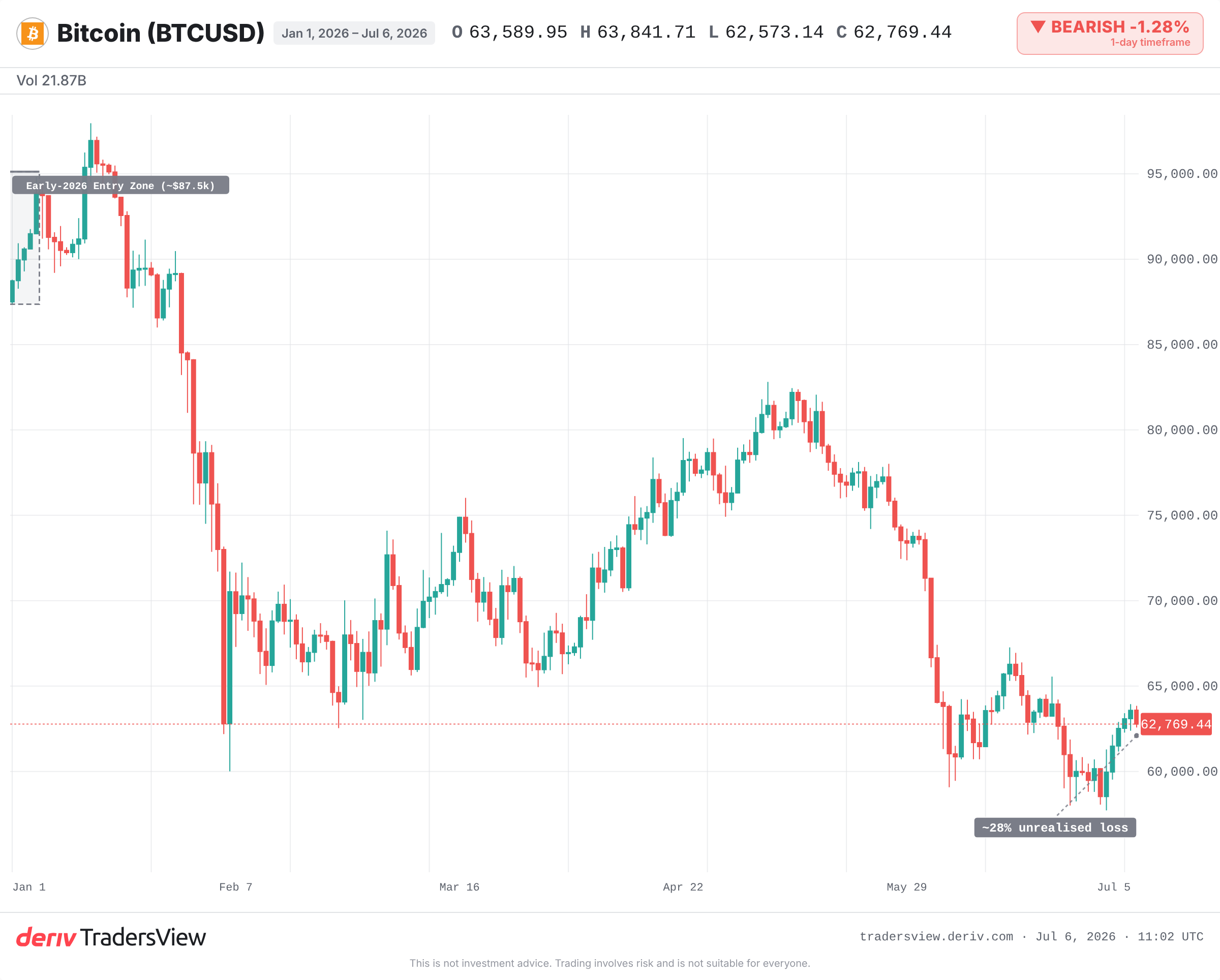
Unrealised loss vs realised loss: what the difference actually means
An unrealised loss is paper pain. You bought Bitcoin higher, it trades lower, and the red number on your screen is what you would lose if you sold right now. You have not.
A realised loss is what happens when you press sell. You convert the paper number into a fixed outcome. The price can recover afterwards, but you are no longer holding to benefit from it.
This is why the same 28% drop feels different to two people. One sees a temporary dip and waits. The other sees ruin and locks it in. The asset did the same thing to both.
What on-chain data says the crowd is feeling
Price tells you what Bitcoin costs. Cost-basis tools tell you what holders are feeling, and right now that signal is grim.
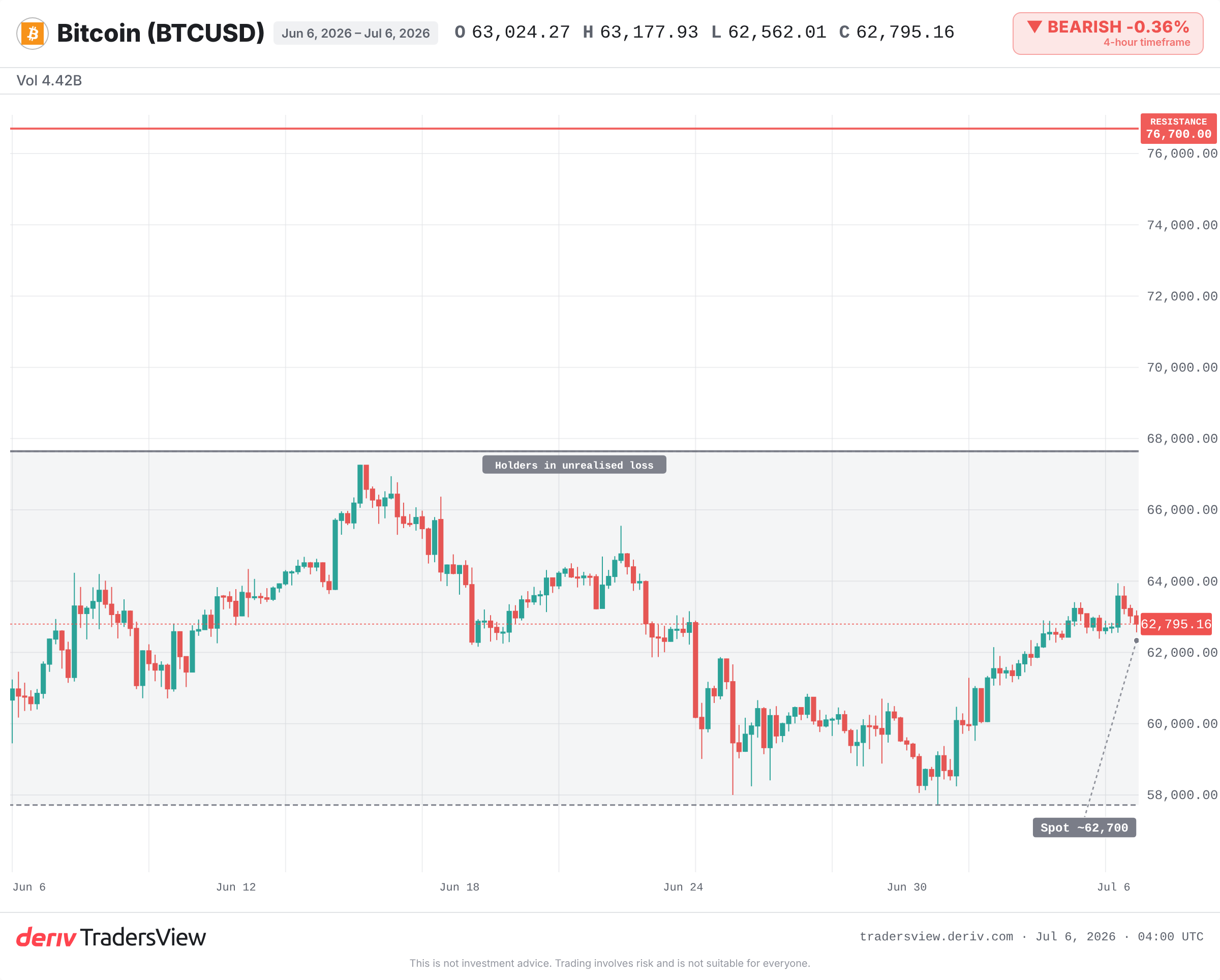
Active holders sit on roughly 20% average unrealised losses, per crypto.news. Bitcoin's realised profit-and-loss ratio has fallen to a 43-month low, per CoinTelegraph citing CryptoQuant. The last time it was this depressed was December 2022, at the bottom that followed the FTX collapse.
A low realised P&L ratio means holders are selling at a loss in unusual numbers. It is a measure of pain, not price. And extreme pain has, in past cycles, clustered near lows rather than partway down.
Why panic-selling has historically punished beginners most
The pattern repeats across Bitcoin's history, though it is only obvious afterwards.
- December 2022: the realised P&L ratio hit today's level as holders capitulated after FTX. That zone marked the cycle low.
- Late 2018: Bitcoin had fallen roughly 80% from its peak, leaving most holders deep underwater. Price bottomed and recovered through 2019.
- March 2020: Bitcoin roughly halved in days, spiking panic selling. It reclaimed the pre-crash level within about two months.
In each case, the sellers who realised their losses near the low locked in damage that patient holders eventually recovered. The moment it felt worst was the moment doing nothing paid best.
Why this comfort story can still be wrong
Now the honest other side. We only tell the recovery story about assets that recovered.
Plenty of individual coins and past manias never came back. "The low realised P&L marked the bottom" is a pattern visible only in hindsight. Santiment notes no clear bottom signal is present, per bitcoinfoundation.org.
Bitcoin's True Market Mean, the aggregate cost basis for holders, sits near $76,700, well above spot. A broken thesis would look like Bitcoin grinding below that mean for months while unrealised losses deepen. That would turn today's "hold and wait" into a multi-year drawdown. It becomes the more likely path if macro liquidity tightens or a large structural seller, miners or a distressed fund or an ETF unwind, forces sustained selling regardless of sentiment.
What to watch instead of the ticker
The screen price is the crowd's opinion, minute to minute. The cost-basis tools tell you something the ticker cannot.
- Whether the realised P&L ratio recovers off its low or stays pinned there.
- Whether Bitcoin can reclaim its True Market Mean over time.
- Whether broad-market liquidity turns, which can override any on-chain signal.
None of this is a reason to buy or sell. It is a way to separate a number on a screen from a decision you cannot undo. The paper loss is real pressure. Turning it into a realised one is a choice, and history suggests the crowd tends to make that choice at the worst possible time.
Frequently asked questions
No. In most jurisdictions a loss only becomes relevant for tax once you sell and realise it. A paper loss on a screen is not a taxable event. Check your local rules, as they differ by country.
It is an estimate of the aggregate cost basis of active holders, roughly the average price at which the coins in circulation were acquired. In July 2024 it sat near $76,700, above the spot price, meaning most active holders were underwater.
No. It shows holders are selling at a loss in unusual numbers, which has clustered near past lows. But it is only clear in hindsight, and analysts including Santiment note no confirmed bottom signal is present. It is context, not a prediction.
The exchange price is the current market quote. Realised P&L measures the profit or loss holders actually lock in when coins move at a gain or loss. It reflects behaviour and sentiment, not just the live quote.