
A bank can bank your IPO and still refuse your account
JPMorgan cut ties with Polymarket over regulatory optics yet still wants its IPO. Why institutional acceptance lags a product's commercial success.
By the Deriv desk · 14 August 2026 · 4 min read

JPMorgan cut its banking ties with prediction-market platform Polymarket over regulatory concerns, yet still wants to underwrite Polymarket's eventual stock-market debut. That gap, where a product is legal, popular and growing but mainstream finance still holds it at arm's length, is where regulatory risk lives.
One firm, two answers. The same reporting says the bank dropped the account but wants the IPO fees. That contradiction is the lesson.
Why a bank drops a legal, growing customer
A bank drops a legal customer when the reputational and regulatory cost of the relationship outweighs the fee income, not because the client broke a law. Polymarket did nothing unlawful. Users bet on events, from elections to Fed decisions, and volumes surged through the 2024 and 2025 news cycle. Commercially, it was working.
None of that saved the banking relationship. According to a Financial Times report relayed via investing.com, JPMorgan ended the tie in late 2025 over regulatory worry, and Polymarket has since lined up a new, unnamed lender. The trigger was optics, not legality. A bank weighs the reputational and regulatory cost of a client against the fee income, and here the cost won.
The gatekeeper signal is slower than the product
A product's commercial traction and its institutional acceptance move on separate tracks, and acceptance is the slower one.
We have seen this pattern before. From 2018 to 2021, banks and payment processors restricted crypto exchanges over regulatory uncertainty even as those platforms generated real revenue. Most operators found smaller or offshore partners. Mainstream banks re-engaged only once the rules, and the fees, grew clearer, sometimes years later. Under Operation Choke Point a decade ago, legal-but-sensitive businesses lost banking access despite breaking no law. Legality is not the test a bank applies; reputational comfort is.
How CFTC scrutiny reaches banking access
The link runs through the bank's own risk desk, not through any direct order. Regulators rarely tell a bank to drop a client; the bank pre-empts them. When a platform's product sits in an unsettled category, event contracts that the CFTC has not formally licensed or classified, the bank cannot price its future compliance cost. An account it cannot price is an account it treats as high-risk. So it exits first and waits for the rules to firm up. That is why a CFTC or SEC ruling, not a commercial milestone, is the event that reopens the door.
Why the same bank still wants the IPO
The sign that complicates the tidy 'cautious no' read is that JPMorgan reportedly still wants to underwrite a Polymarket IPO. The two roles carry different risk. A banking relationship is an open-ended liability; an underwriting mandate is a one-off, ring-fenced deal. Holding a client's deposits and payments exposes the bank to that client's conduct day after day. Taking it public is a discrete transaction, priced, disclosed and closed. The compliance burden of a standing account is heavier than that of a single fee event.
If the bank thought prediction markets were illegitimate, it would not want to profit from taking one public. So the debanking looks less like a lasting verdict and more like short-term regulatory cover. The 'no' on the current account may really be a 'not yet'. That distinction matters when you try to price how sticky a regulatory headwind is.
What this tells traders about regulatory risk
Popularity is not permission. When you assess any young platform, whether prediction markets, a crypto venue or a fintech, separate two questions: is it commercially working, and has the gatekeeper accepted it? The gap between those answers is the risk.
The evidence leans towards this being a soft, reversible break rather than a hard rejection. It would be confirmed if JPMorgan or a peer quietly re-engages once US regulators formally classify or license event contracts. It would be challenged if other banks follow JPMorgan out and no underwriting role materialises.
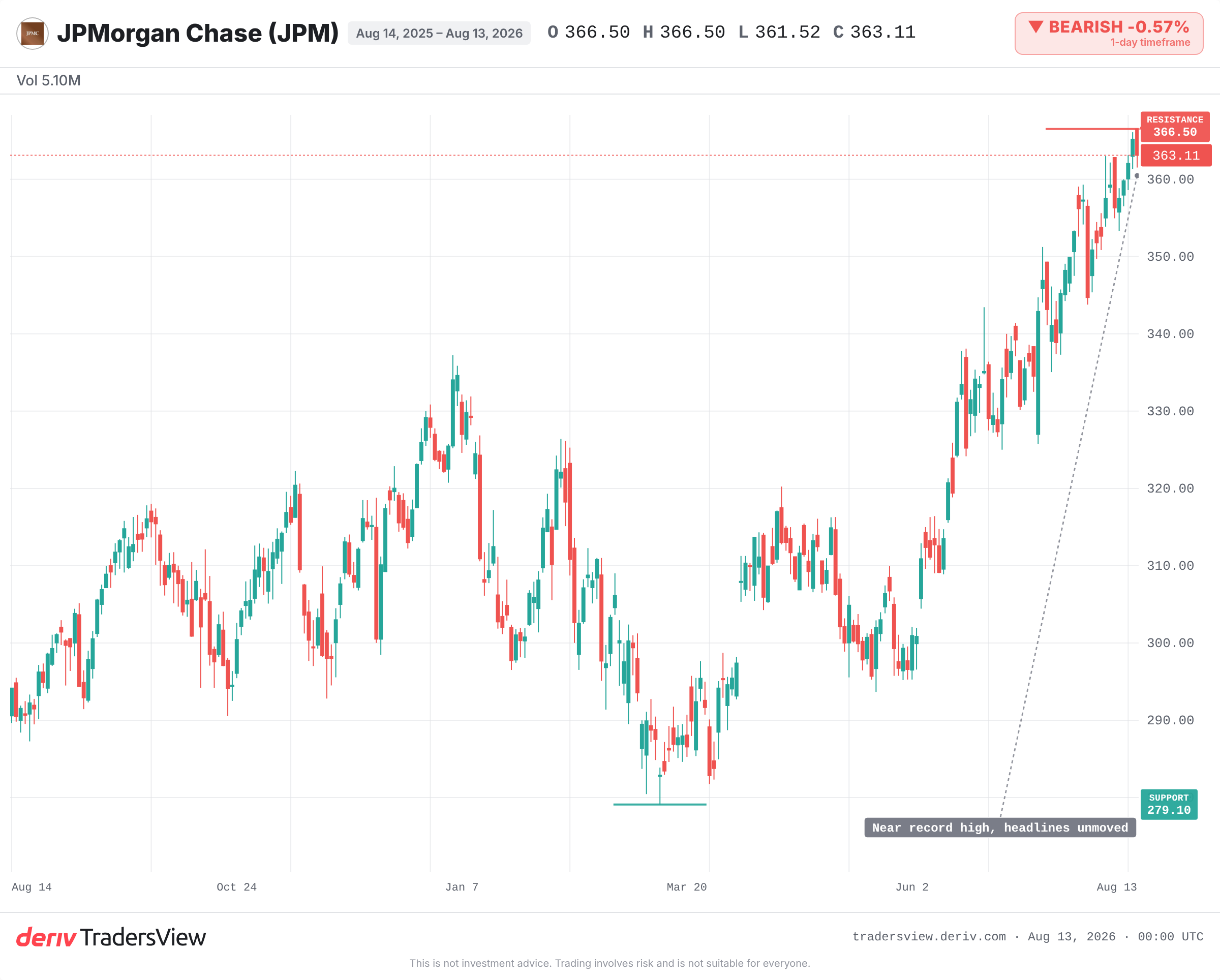
Watch the identity of Polymarket's new lender, any CFTC or SEC ruling on prediction markets, and whether JPMorgan actually lands that IPO mandate. For now, the JPMorgan share price sits near its record high, untroubled by any of it. The headline that rattles a startup can leave the gatekeeper's own stock unmoved.
Frequently asked questions
Debanking is when a bank ends or refuses a customer relationship. It is generally legal, and banks often do it over reputational or regulatory concern rather than any wrongdoing by the client.
It depends on the platform and how the event contracts are structured. US regulators such as the CFTC and SEC have not settled a single clear framework, which is why banks treat these platforms cautiously even as usage grows.
Yes. Losing a banking relationship does not bar a firm from an IPO. A different bank can still arrange the listing, which is why JPMorgan can reportedly pursue underwriting fees despite cutting day-to-day ties.
Not necessarily. A firm can be profitable and growing yet still lose banking access over regulatory optics. Commercial success and institutional acceptance are separate signals.